Product Overview
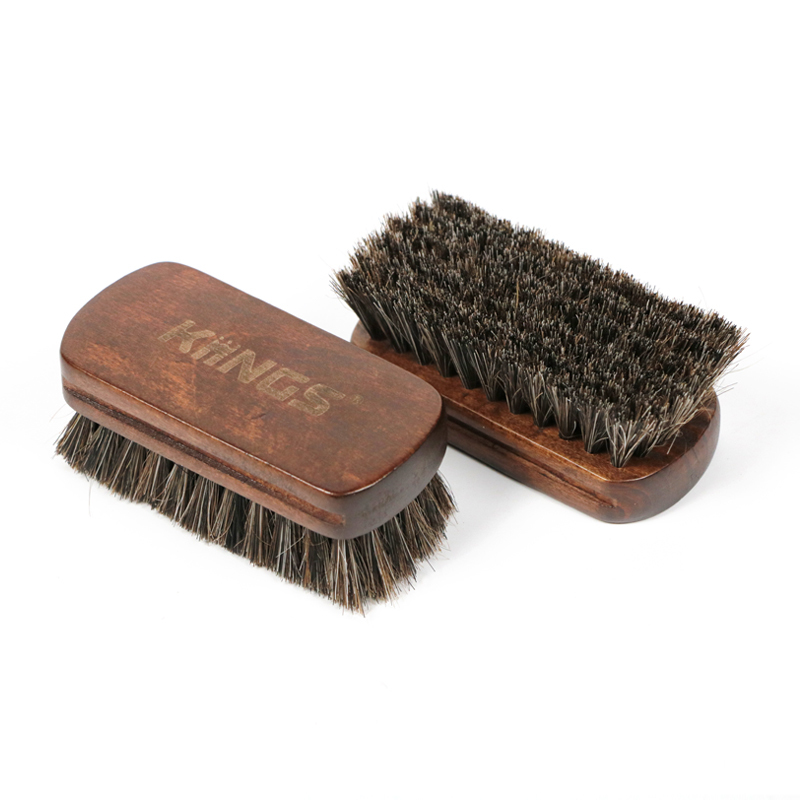
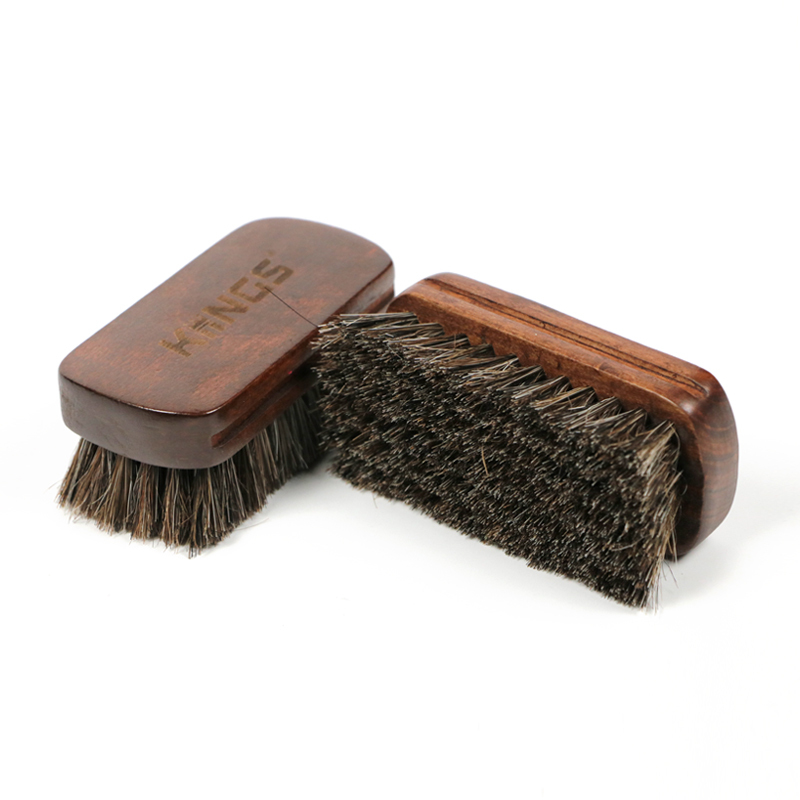
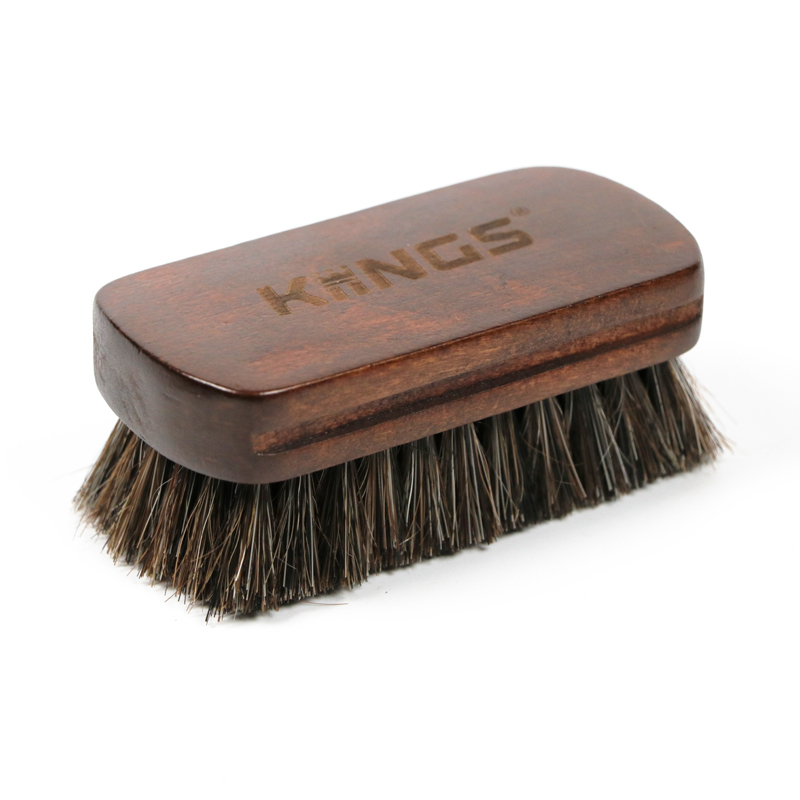
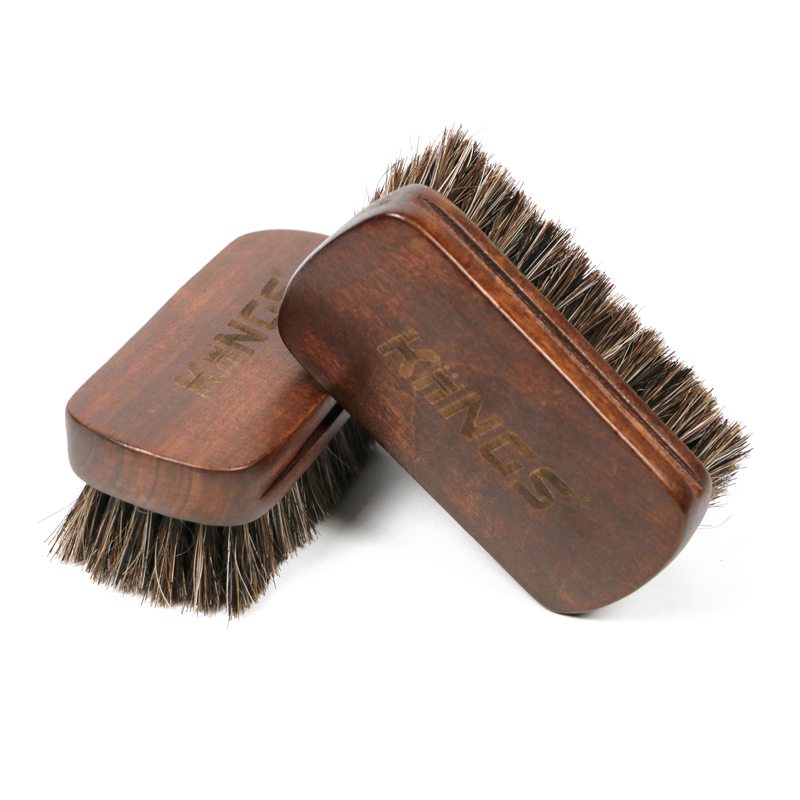
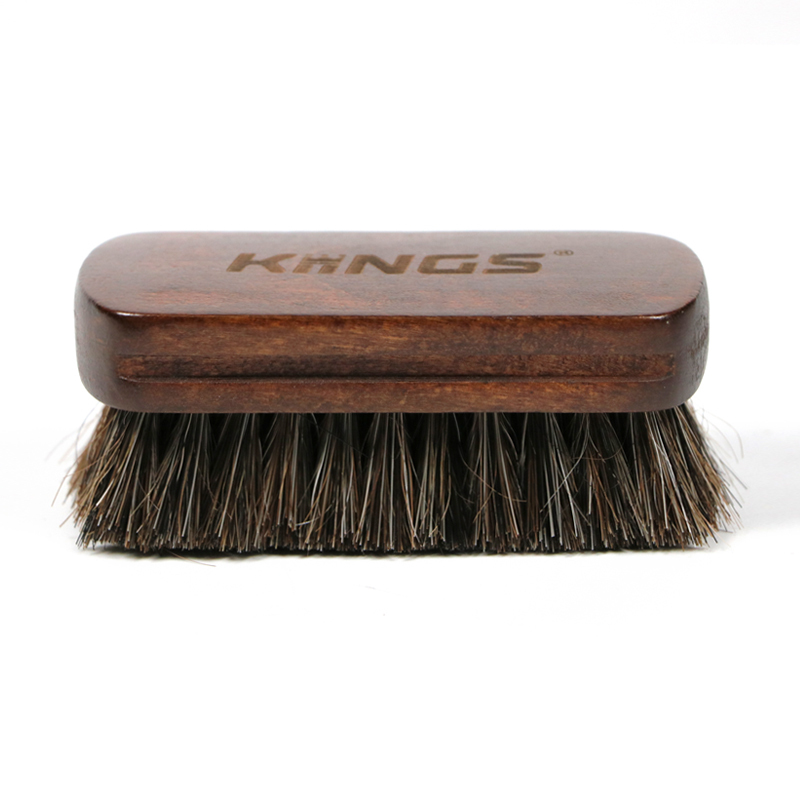
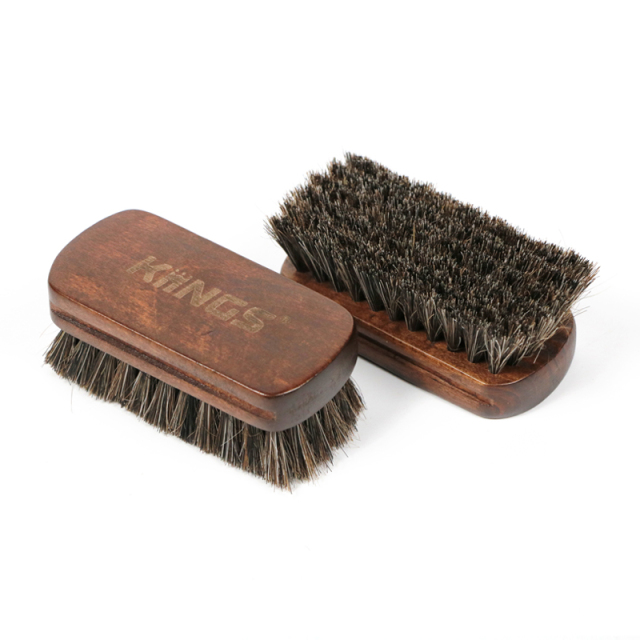
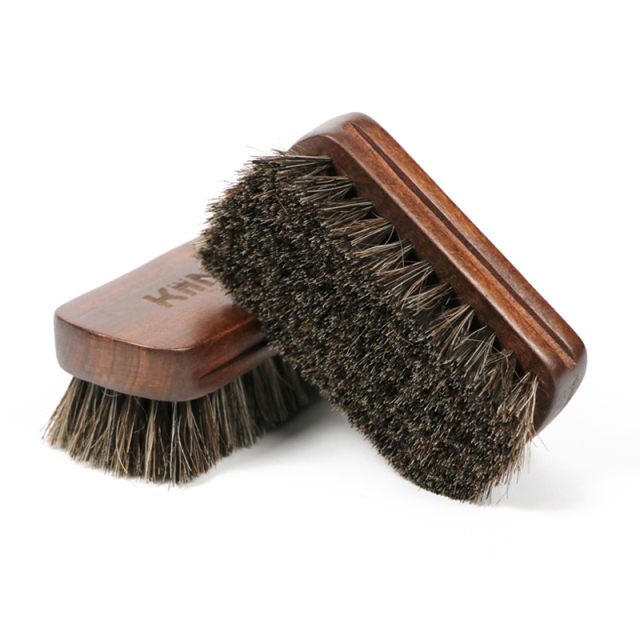
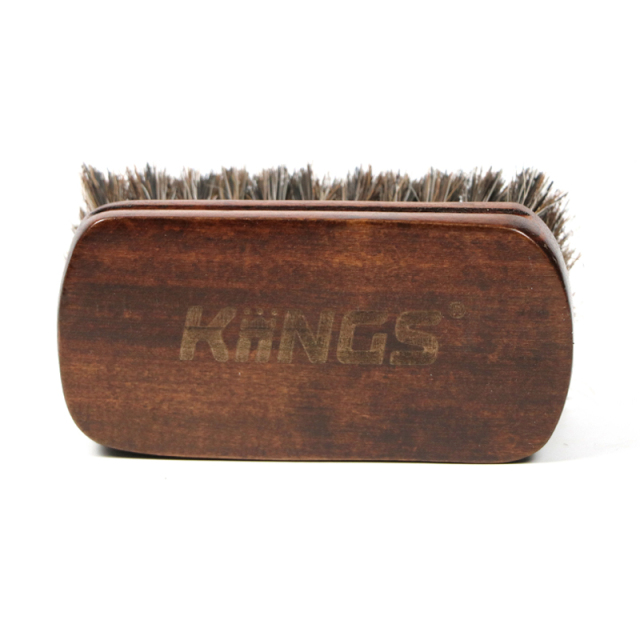
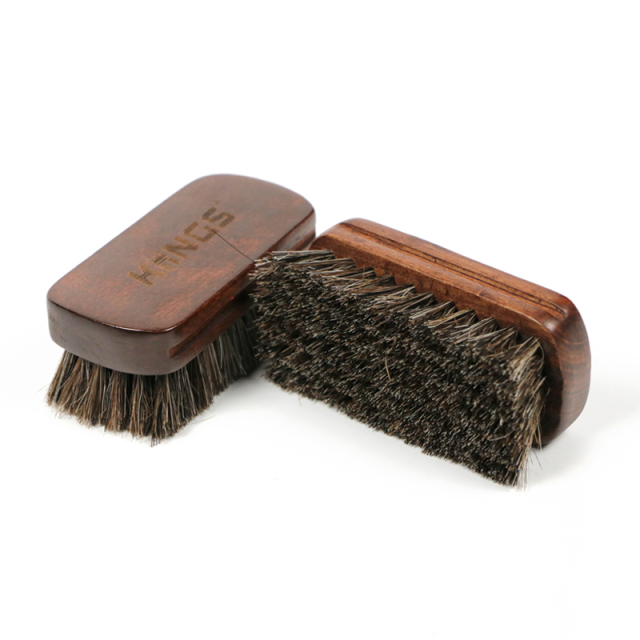
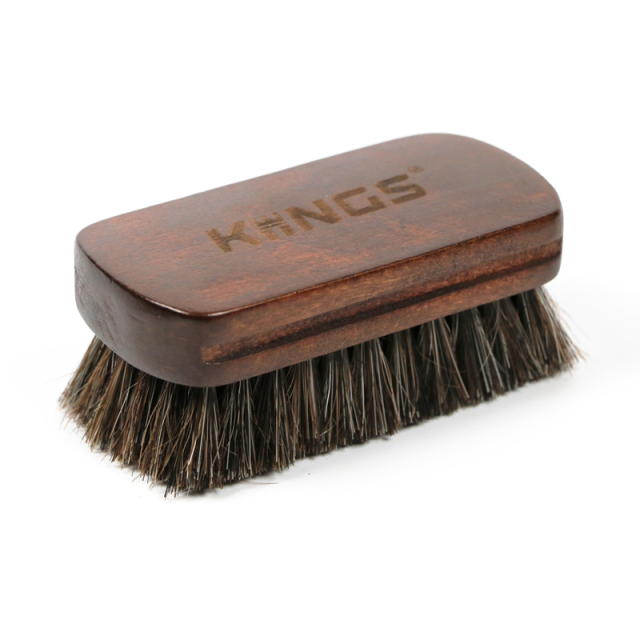
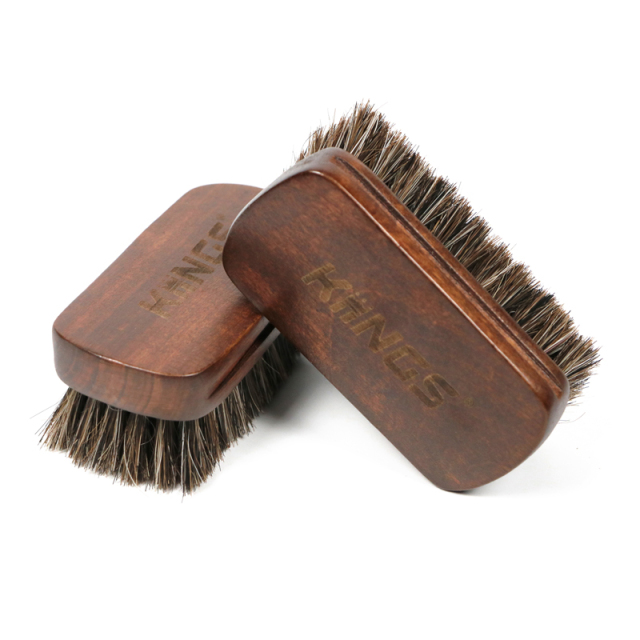
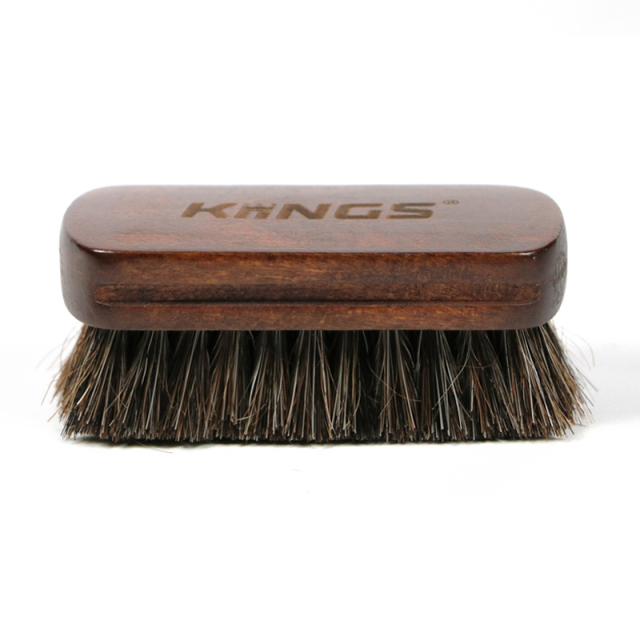
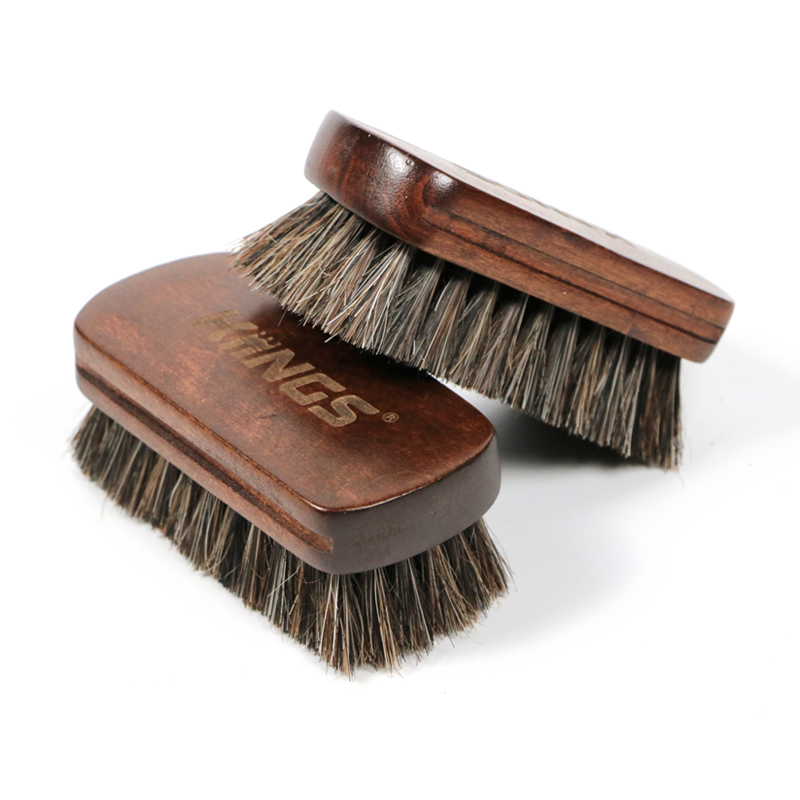
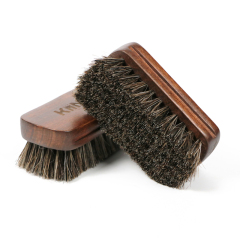
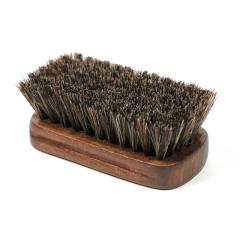
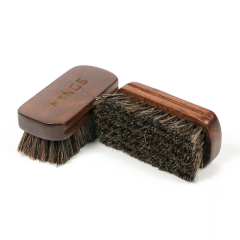
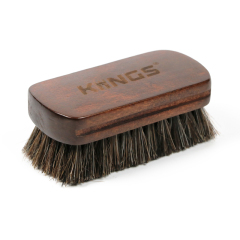
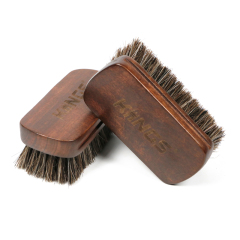
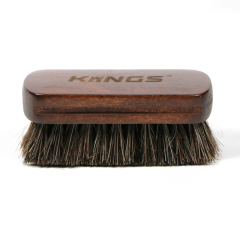
Small on purpose. This is the compact half of the wooden horse hair brush family — a small block of varnished beech carrying horse hair bristles in a warm brown. Where a full-size brush covers a seat panel in broad strokes, this one is built for the places a wide head cannot sit: the piping along a cushion edge, the stitch rows, the narrow run of leather beside the seat rail.
Its stated job is cleaning car leather seats, and it does that work in the tight zones — around bolsters, under headrest collars, along the fold where the backrest meets the base. Dry, it lifts dust and grit out of perforations and seams. Damp, it works a cleaner into the stitching without soaking the leather behind it.
Distributors, detailing studios and private-label brands buy it as a stock item, usually alongside the larger brush, an interior cleaner and a microfibre cloth. As car cleaning products manufacturers we watch a lot of small tools come and go; this one stays because it does a job the big brush physically cannot.
Beech Handle & Horse Hair
Handle
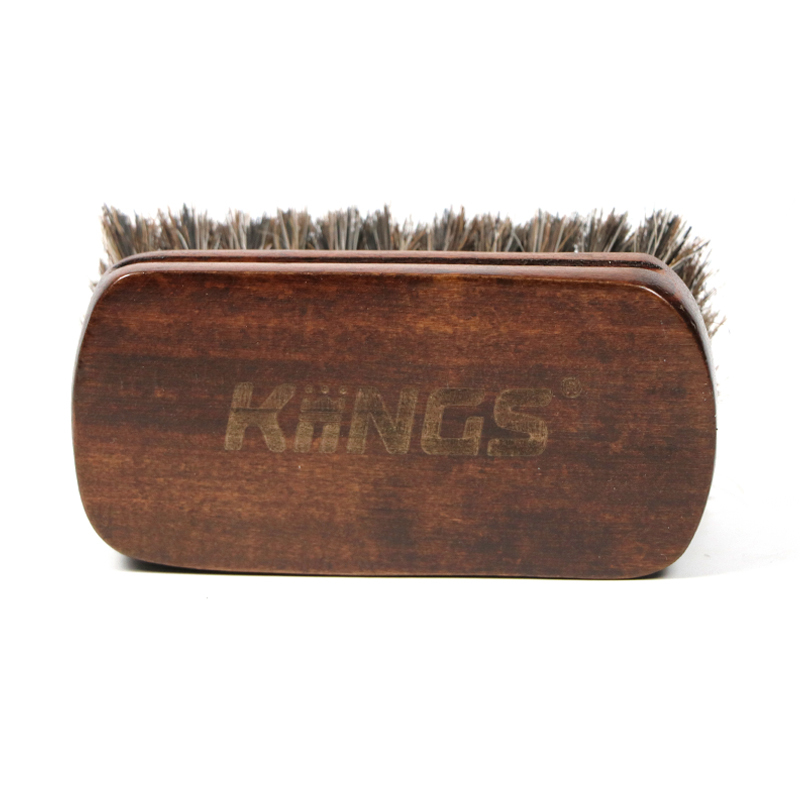
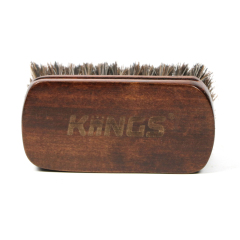
The block is cut from beech rather than moulded as a shell — a tight-grained hardwood that takes varnish evenly, stays stable when it gets damp and holds its edges instead of furrowing the way softer woods do. The varnish goes on before the bristle bundle is set in, sealing the grain where handle meets tuft, which matters for a tool that spends its working life beside water-based car care supplies.
Bristle
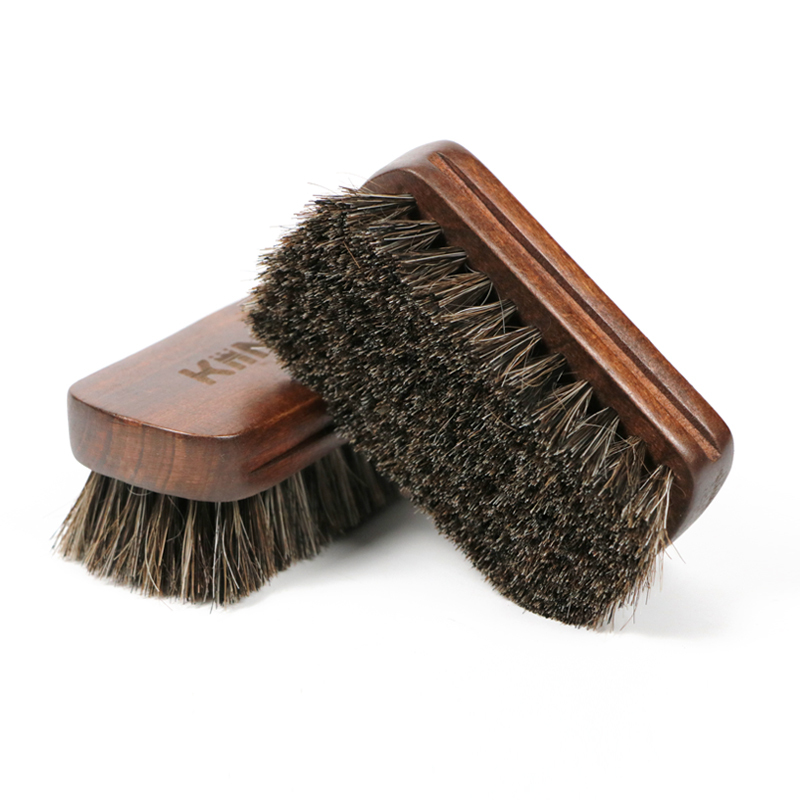
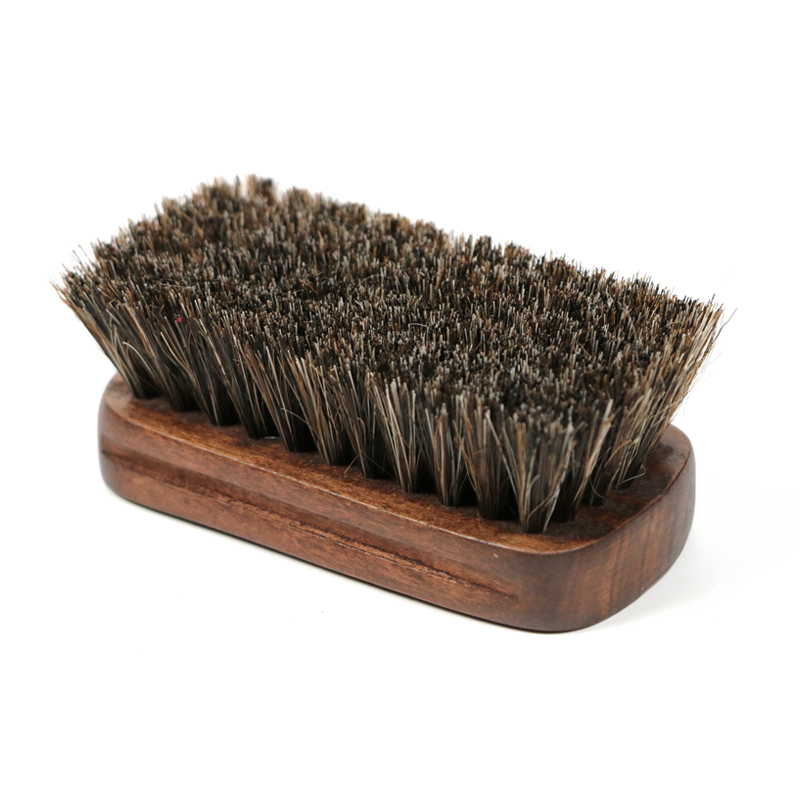
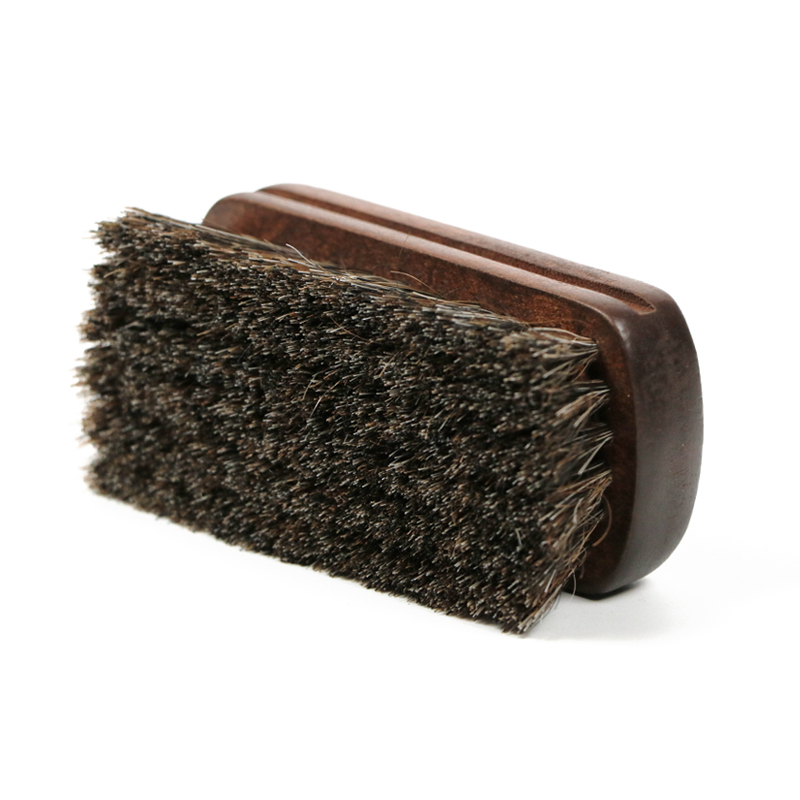
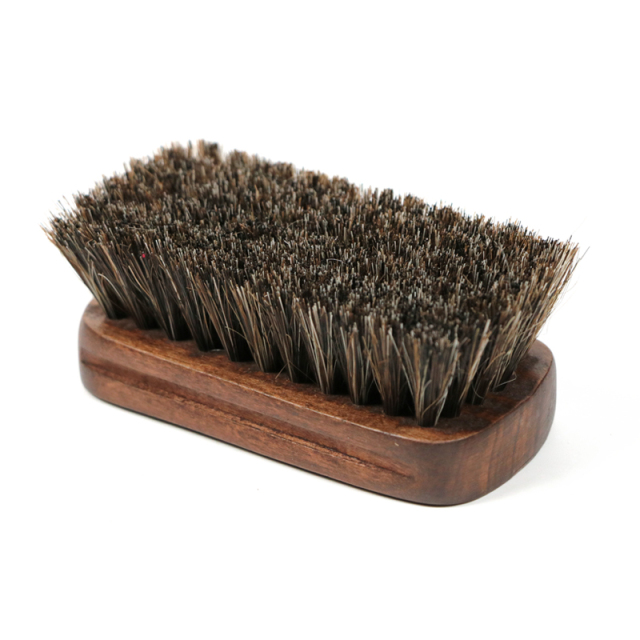
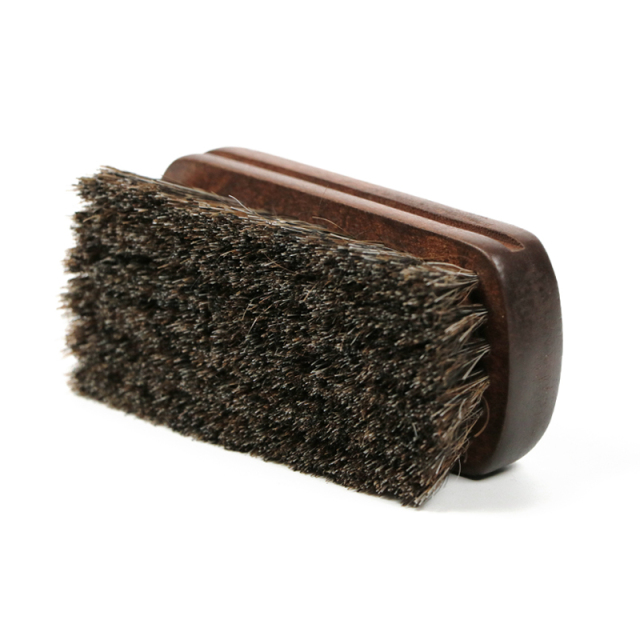
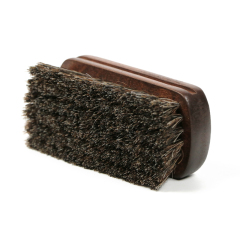
Horse hair, packed in dense rows across a rounded back. Horse hair tapers from root to tip: the root gives the tuft body so it keeps its shape under a working hand, while the tip stays fine enough to sweep a perforation or a stitch line without scrubbing the grain. It is softer and more flexible than the stiff filament used on wash brushes, which is why we specify it for leather, vinyl and trim rather than for wheels, grilles or paint.
Finish
Rounded ends, a smooth varnished back and a profile that sits in the hand without needing a grip. Tuft density is checked batch by batch — a sparse brush sheds bristles onto the surface a detailer has just cleaned, and that is the fastest way to lose a repeat order.
Surfaces to Avoid
- High-gloss paint and clear coat. A dry bristle drawn over a corrected panel can leave fine marks that then need polishing out. Paint has its own tools; keep this brush inside the cabin.
- Piano-black trim, gloss plastic and screen surrounds. These finishes record every pass, and the marks are permanent rather than washable.
- Paint protection film and vinyl wraps. Bristle tips catch on the cut edge of a film or wrap and lift it. Wipe those panels instead.
- Polished chrome, badge faces and mirror caps. Lacquered chrome and soft metal scuff under a bristle that is perfectly safe on leather.
- Aniline, open-pore and unfinished leather. On these hides even horse hair is abrasive relative to the pigment. Use a damp microfibre and a leather-safe car care product rather than a brush.
- Alcantara, suede and fabric headliners. Bristles raise the nap and leave a brushed patch that will not settle back into the weave.
- Wheels, tyres, grilles and engine bays. The brush is not a wash-bay tool. Brake dust and grit stay in the tuft and come back out on the next seat, so once a brush has been on a wheel it should not return to interior work.
- Perforated leather plus liquid. The brush is fine here, the excess liquid is not. Mist the bristles rather than the seat so a car detailing cleaner does not run down into the foam behind the hide.
Tight-Area Detailing Work
- Seat piping and fluting — the raised bead around a cushion edge traps dirt in a line a wide brush skates straight over. The short head sits on the bead and follows it end to end.
- Stitch rows and double seams — thread holds grit that a cloth only smears around. Work the bristles along the stitch direction rather than across it.
- Perforated leather — the holes in a seat centre hold dust that a vacuum misses and a cloth pushes from hole to hole; the fine tips pick it out.
- Console gaps, seat rails and handbrake surrounds — a full brush body wedges in these channels, while the compact block turns inside them.
- Vent slats, switch surrounds and grab handles — dust settles into the recessed edge around buttons and into the narrow slots of a vent.
- Door cards and armrest seams — the folded seam at the bottom of a door card is where a cloth leaves a grey line and a small brush does not.
- Working a cleaner into trim — loaded with a car detailing cleaner, the fine tips lift product and soil out of the grain and hand it to the cloth instead of driving it deeper.
- Kit building and wholesale packs — the brush slots into a car kit cleaner pack or an interior bundle, where it is the piece a customer keeps using long after the bottle is finished.
- Two-brush interiors — most cleaning tools for car interior work are bought in pairs for exactly this reason: a wide head for panels, a short head for the gaps between them.
- Range building — on a stock list it reads as one of those small cleaning tools that get used every day; distributors stock it beside the larger brush rather than instead of it.
- Importers and regional distributors. You are filling out an interior care shelf and want a small tool that reorders predictably rather than a hero line. This brush starts at 100 pcs, ships from stock on the SURAINBOW line, and sits next to the leather cleaners already in your car care supplies range. Detailing studios and wash bays. The question is not whether a compact brush works but whether the tenth one feels like the first. Buyers at this end order in repeat cartons and check tuft density on arrival, because a brush that sheds onto a seat someone has just cleaned costs a rework. Private-label brand owners. For a brand putting its own logo on an inexpensive accessory without committing to a container load, a 100-piece first run is the usual entry point. Kit builders and e-commerce sellers. One slot in a car kit cleaner pack or an interior bundle — the piece a customer keeps long after the bottle is empty. It also works as the add-on line in a mixed order of cleaning tools for car interiors, where the buyer wants brushes, cloths and chemicals from one supplier. Who it is not for. Buyers looking for a single brush to handle wheels, paint and interior alike. This is a finishing tool for soft interior surfaces, and a wash brush does a different job.
Application & Brush Care
- Test a hidden panel first. Behind the seat skirt or under the cushion — finished leathers vary, and a minute of testing beats a marked bolster.
- Brush dry before anything wet. Short strokes over perforations, stitching and piping, tapping the head out as it loads up.
- Load the bristles, not the seat. A light mist of car detailing cleaner onto the head keeps product out of the foam behind the leather and puts it where the work is.
- Work along the seams. Follow the stitch line, then turn the head across the grain; several light passes lift more than one hard scrub.
- Wipe straight away. A clean microfibre takes the lifted soil off before it dries back into the grain.
- Rinse between sections. Swill the bristles in clean water, shake out, and blot the handle dry rather than leaving it wet.
- Finish with your usual car care products once the leather is dry. Conditioner, glaze or coating goes on after the brush work, never before it.
- Store bristles down. Bristles down or flat in the toolbox keeps the tuft from flattening against the wood between jobs.
Pairing & Accessories
- Keep one bottle per bay alongside the brush.
- Two clean microfibres per panel. One to take the lifted soil, one dry to finish. The brush lifts the dirt, the cloth removes it, and a dirty cloth only spreads it back.
- The full-size horse hair brush T-633. Same varnished beech and horse hair construction at 17 cm. Stock the pair — the large head for panels and bolsters, this one for piping, seams and channels — and customers stop asking which one they need.
- An ultra-soft synthetic set. For trims too delicate even for horse hair, or gaps finer than this head will enter, a soft synthetic set reaches in without marking.
- The Interior SPA kit A-99. Cleaner plus leather protective glaze in one box, for the two-step routine that follows the brushing. Sold together with the brush, it gives a reseller a complete interior package rather than a single tool.
- Interior-only consumables. Roll your car detailing cleaner, microfibres and interior brushes into one interior kit and keep wash-shampoo brushes, wheel brushes and degreaser away from it, so nothing gritty ever reaches a seat.
Specifications
| Product name | Small wooden horse hair brush |
| Model | T-637 |
| Type | Brush |
| Bristle material | Horse hair |
| Handle material | Beech wood, varnished |
| Colour | Brown |
| Length | 10.5 cm |
| Width | 5.2 cm |
| Depth | 4.2 cm |
| Intended use | Cleaning car leather seats, piping, stitching and interior trim |
| Style | Auto detailing |
| Brand | SURAINBOW |
| Place of origin | Guangdong, China |
Sampling & Packaging Approval
- Brief first. Item, quantity, destination market and the branding you have in mind. We work as car cleaning products manufacturers rather than a catalogue desk, so those four points set the sample, the carton and the document set at the same time.
- Sample scope and timing. What is sent, how many pieces and when are confirmed with your sales contact before dispatch, along with any applicable charges.
- Evaluate on your own surfaces. Run the brush on the leather you actually work with and on a scrap seat; note how the tuft behaves dry, damp and after a rinse.
- Seal the approved piece. Label and store the brush you signed off, so the bulk run is judged against something concrete instead of memory.
- Proof the packaging. Artwork, labels, barcode and carton marks are approved before production. Buyers building a car kit cleaner pack usually lock carton and hang-tag details at this stage.
- Confirm the brand position. Final brand artwork and carton marks are signed off here, and matched to the rest of your car care supplies range.
Ordering, Packing & After-Sales
- Confirm the item and the quantity. Orders start at 100 pcs. If the brush is joining a wider cleaning tools for car order, list everything in one enquiry and we will quote it together.
- Settle the branding. OEM orders are accepted. As car cleaning products manufacturers we can put your mark on the brush, on the packaging or on both; the method is fixed at approval.
- Agree the commercial terms. The accepted payment method, currency and payment schedule are set out on the commercial offer — card and wallet options depend on the order and the stage.
- Lock the packing. Carton configuration is confirmed with the order, and carton marks can be matched to your other car care products shipments so the delivery arrives as one line.
- Confirm the document set. Invoice, packing list and customs paperwork travel with the shipment. If your market needs a third-party test report or a safety file for cleaning tools, raise it here and we will confirm what can be supplied.
- Dispatch. In stock and fast shipping on the SURAINBOW line.
- Check on arrival. Report short shipments, damage or leakage within 7 days of receipt, and quality concerns within 30 days, with photos, the order reference and the batch number.
- Keep the batch reference. Batch records and retained samples are held against the run, so a later question is checked against the same reference the order was approved on.
Scale & Supply Capability
SURAINBOW is run by Guangzhou Liangdian Automotive Supplies Co., Ltd., a factory-trade operation set up in Guangzhou in 2010 and now 50 people strong. Sixteen years in car care have given us a one-stop supply position: our own SURAINBOW lines are held in stock for fast shipping, and an associate factory with modern production equipment and an established quality management system keeps replenishment moving. We take OEM and ODM work and our R&D team develops to your specification. Buyers in the Middle East, the United States, Southeast Asia, Europe, the UK, Russia, Africa and Australia already order from us.
FAQ
Where does the small head help most?
Seat piping, stitch rows, perforated panels, console gaps and vent surrounds — anywhere a full brush body cannot sit flat. It is the short half of a two-brush interior set rather than a replacement for the larger one, and of all the cleaning tools for car interiors that a detailer keeps within reach, it is usually the one picked up last on a panel and first on a seam.
Is the bristle genuine horse hair, and will it mark leather?
The bristle is horse hair, set in dense rows on a varnished beech body. On leather what matters is that the tips are fine and flexible enough to lift soil out of the grain instead of dragging across it, and that pressure stays light. Test a hidden panel first — finished and aniline leathers vary a good deal, and a car detailing cleaner that is too strong will mark a seat long before a horse hair brush does.
Can it be used wet with an interior cleaner?
Yes, damp rather than soaked. Mist the head instead of the seat, keep the passes short, and wipe the surface straight away. That wet-then-wipe routine is why the brush turns up in so many car kit cleaner packs: it handles the dry dusting pass and the wet agitation pass on the same panel, and the varnished handle copes with splashes far better than bare wood would.
How does it differ from the larger wooden horse hair brush?
Same beech handle, same horse hair, shorter body than the full-size brush. The larger one covers open panels and bolsters faster; this one goes where that head cannot. Most buyers stock both, and if you only carry one, the full-size brush covers more surface while the compact one covers the jobs customers complain about. They sit in the same cleaning tools line rather than competing with each other.
Which surfaces should it stay away from?
Glossy paint, piano-black trim, paint protection film and polished chrome. Horse hair is soft, but any bristle dragged across a high-gloss finish can leave a mark, and those surfaces have their own tools anyway. It belongs on leather, vinyl, textured plastic, fabric seams and interior trim. Put that boundary on the listing and in the car care supplies catalogue entry, and you avoid most returns conversations before they start.
Does it work on vinyl, synthetic leather and textured plastic?
Yes. The bristles follow the moulded grain on door cards and dashboard panels and lift out dust that a cloth skates over. Keep the pressure light on printed or coated plastics, and use it dry on those surfaces unless a mild car care products cleaner is in play. The compact head is especially useful around the base of a dashboard and the moulded edges of a glovebox lid.