Product Overview
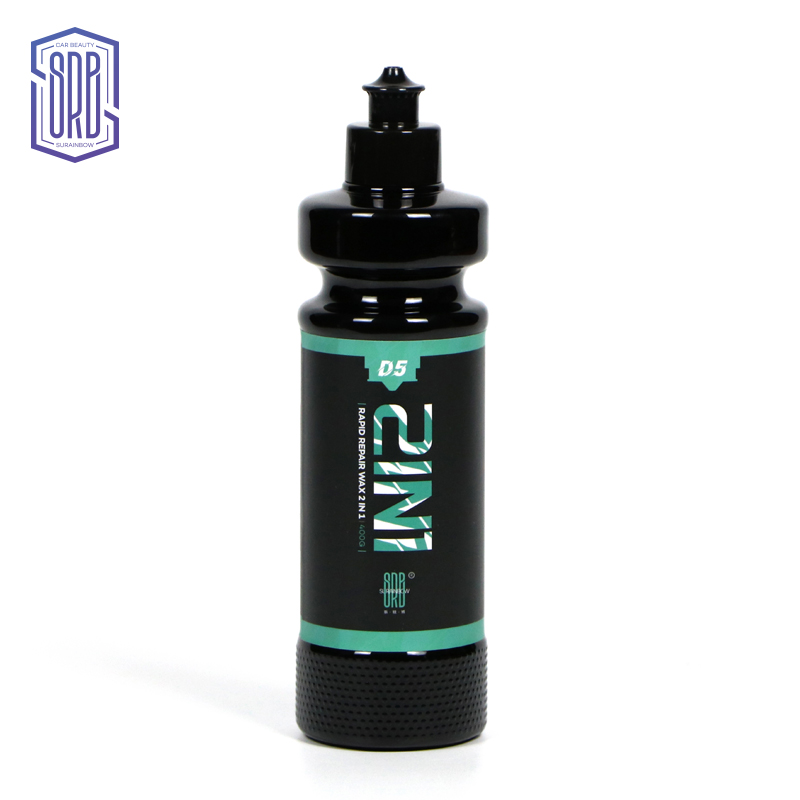
Painted panels are the whole working area for this product: it renews and repairs light surface damage and leaves a wax finish on the same section in one application. The bottle carries 400 g of ready-to-use product with a narrow pointed nozzle, so a technician can lay a controlled bead onto an applicator pad instead of pouring out more than the panel needs.
For a working shop the appeal is straightforward. The usual route to a finished panel runs through a repair product, then a finishing product, then a protective wax; here the repair and the wax come out of the same bottle, so the marked area and the panel around it are handled in one pass and the car moves on. The surface left behind is waxed and glossy rather than bare.
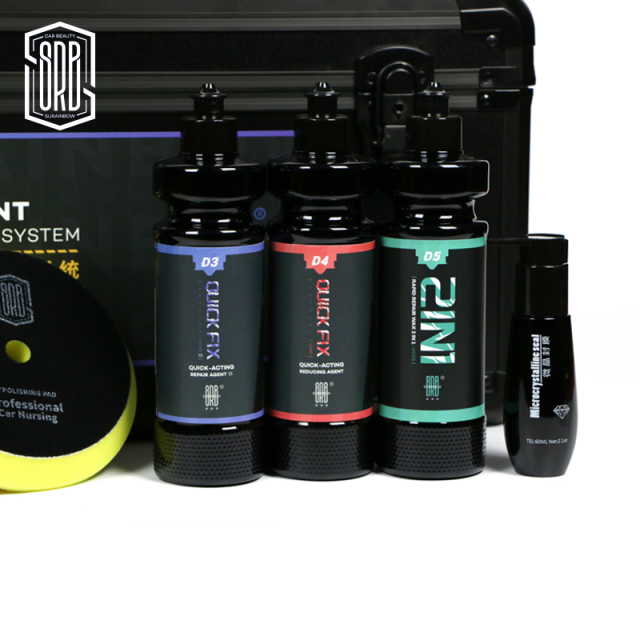
The finish suits painted automotive surfaces — clear-coated solid colours, metallic and pearlescent paints, and the single-stage finishes still found on older and commercial vehicles. It sits in the SURAINBOW polish series alongside the repair agent and the reducing agent that many detailers already keep on the cart.
Shops buy it for the finishing bench; distributors and trade suppliers buy it as a single answer to customers who want the marks gone and the paint protected at the same time. In both cases the work happens on the paint film, and the panel leaves the bench waxed and ready to hand over.
Repair and Wax in One Pass
- Two operations on one pad: the product is built for both paint repair and waxing, so the marked area and the panel around it are worked once instead of twice.
- The wax is already in the bottle: after buffing, the panel is left with a waxed surface rather than a bare, freshly worked one, which is the difference between a repair pass and a finished job.
- One product covers the finishing stage: it works as a car wax polish rather than a stand-alone compound, so a technician does not have to put down one bottle and pick up another mid-panel.
- Well-suited to quick-turn work: pre-delivery preparation, lot reconditioning and between-detail maintenance all require a car polish and wax result in a single stage, which is exactly the function of this product.
- It is a wax, not a coating: where a customer has paid for a ceramic coating or a long-life sealant, this is maintenance work on top of that layer, not the protection layer itself.
- It does not replace a full correction: on a car sold as a multi-stage detail, the correction stages the customer paid for still have to happen; this product finishes the panel and waxes it.
Paint Surfaces and Compatibility
Clear-coated paint is the main target: solid colours, metallics and pearlescent finishes all take the product the same way. Older single-stage paints, where the colour layer is the surface itself, are painted surfaces too and are treated the same, although the colour can transfer onto a white pad on that type of finish.
The product is an auto wax for painted panels, not a trim restorer, glass polish or metal polish. Unpainted textured plastic, rubber seals, badges, chrome and bare aluminium are outside its job, and any product that lands on them should be wiped off before it dries rather than buffed in.
Finish type matters more than colour. Matte, satin and vinyl-wrapped surfaces do not take wax the way gloss paint does, and the tone can shift under a waxed layer, so work a small, inconspicuous area first and look at it in daylight before treating a whole panel. Chalky, oxidised paint needs washing and, in bad cases, correction before a wax for cars will hold on it at all.
Condition sets the ceiling on the result. Sound paint with light surface marks is the case this product is made for. Lifting clear coat, blistering, crazing or paint that has already failed needs an assessment before anything is applied, because no wax will hide it.
Application Steps
- Wash and dry the panel first — road film or dust trapped under the applicator will mark the paint you are trying to improve, so start from a genuinely clean, dry surface.
- Inspect the damage under a bright light before touching it — decide whether the mark sits in the surface or has gone through the clear coat, because that decides whether the product is the right answer at all.
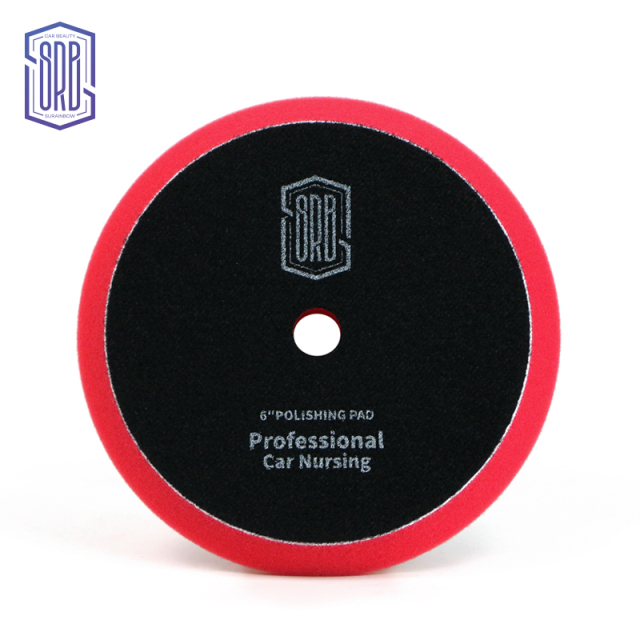
- Shake the bottle and dispense a small amount onto a soft foam applicator pad — the pointed nozzle gives you control, and a thin, even film works better than a heavy one.
- Work the product into the marked area with small overlapping passes, keeping the pad flat and the pressure even, then spread the remainder over the surrounding panel so the finish blends.
- Buff off the residue with a clean, dry microfiber towel before it sets hard, turning the towel to a fresh face as it loads up.
- Check the panel again from several angles — if the mark is still there, repeat on that area rather than adding more product across the whole panel.
- Finish the adjoining panels so the gloss line is even, and switch to a clean pad or towel for the next section of the car.
- Wipe the edges, badges and trim with a damp towel at the end so no dried residue is left sitting in the gaps.
Where Detailers Use It
- Used-car reconditioning: a dealer lot preparing trade-ins lifts light wash marks and restores gloss panel by panel, without booking each car into a full correction job.
- Pre-delivery preparation: transport marks, light hazing and handling swirls on a nearly new car are finished and waxed in one pass before handover.
- Rental and fleet turnaround: cars come back with small marks and go out again the same day, and a wax for cars that repairs and finishes together fits that cycle better than a two-product routine.
- Maintenance washes at a detailing shop: a customer who wants the car sharp between full details gets a hand-applied wax pass without paying for correction time.
- Body shop handover: light handling marks left after a panel repair and its cure period are finished and waxed before the car goes back to its owner.
- Distributor and e-commerce assortments: a two-in-one format makes a practical single-item listing for customers who do not want a shelf of separate compounds, polishes and car wax products.
Bottle, Contents and Shelf Life
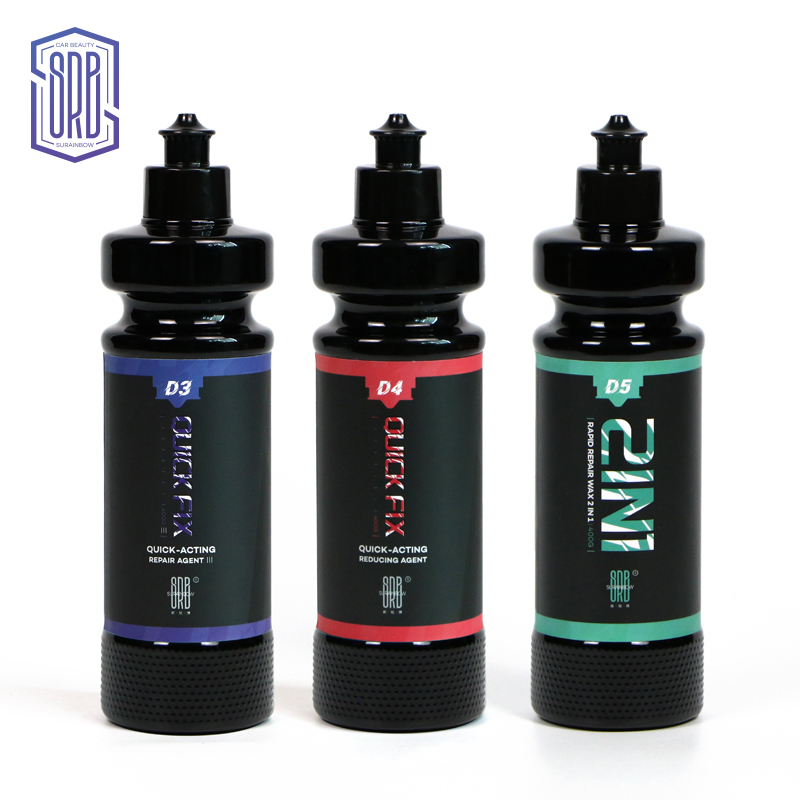
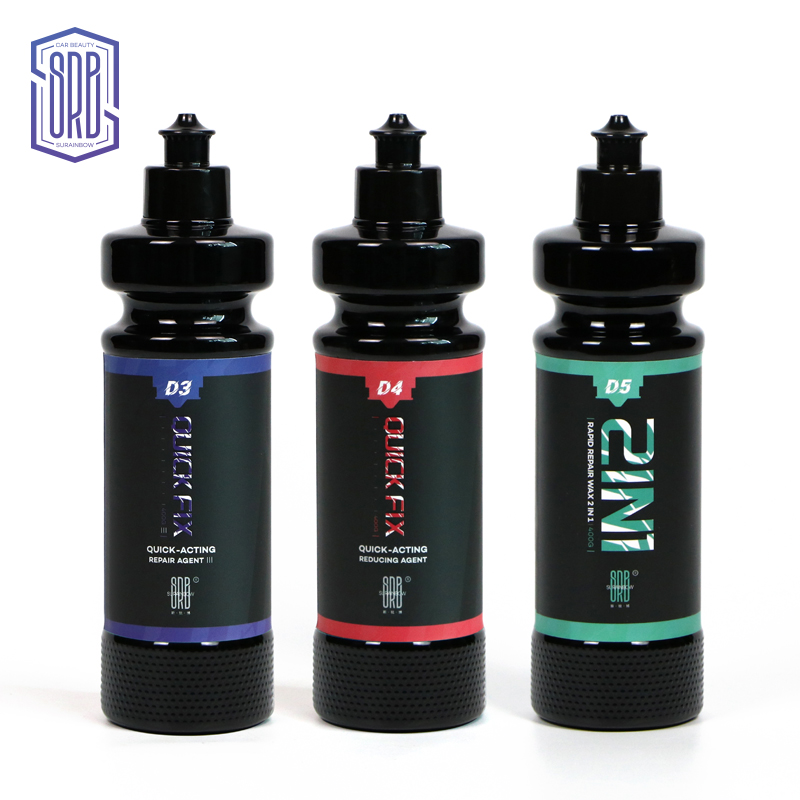
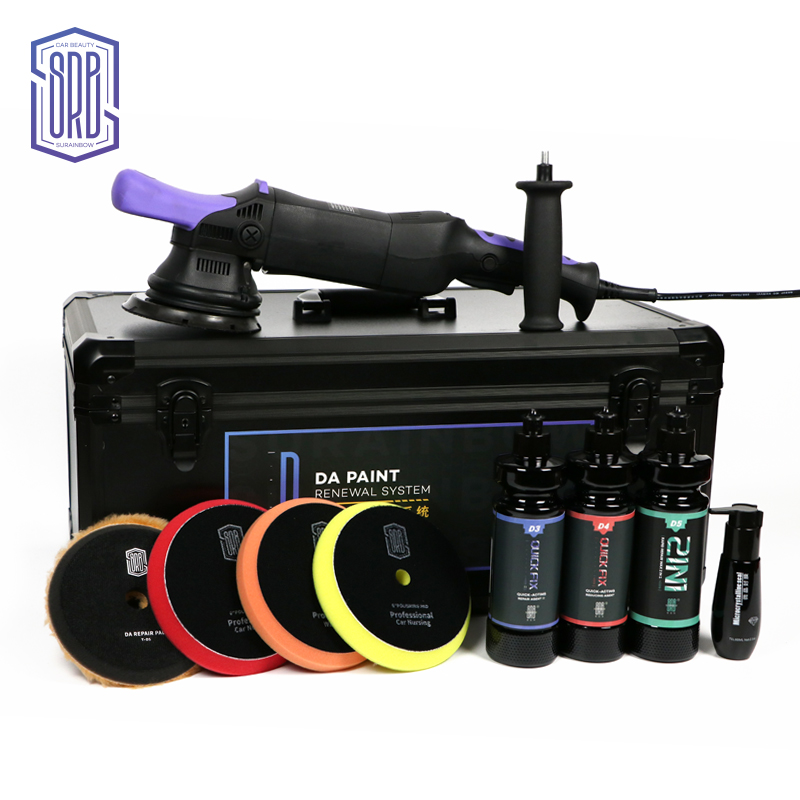
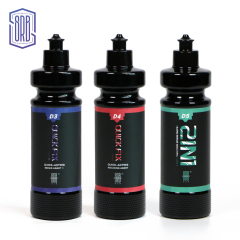
A black 400 g bottle with a colour-accented label carries the product, with a contoured neck, a narrow pointed dispensing tip and a textured lower body that stays put in a hand already holding a towel. The accent colour separates the D-series bottles on a crowded shelf, which matters when a technician is reaching for one product among several look-alike containers.
Contents are ready to use — there is no mixing or dilution step, so what leaves the nozzle is what goes onto the pad. Ingredient details, hazardous-component information and first-aid wording belong with the product's MSDS rather than a short back label, so keep that document in the safety file and work from it when you prepare local labels.
Shelf life is 3 years. Keep the bottle upright and tightly capped, out of direct sun and away from heat, and rotate stock first in, first out so the oldest bottle is used first. A bottle that has stood for a while should be shaken before use so the contents reach the pad evenly rather than separating in the neck.
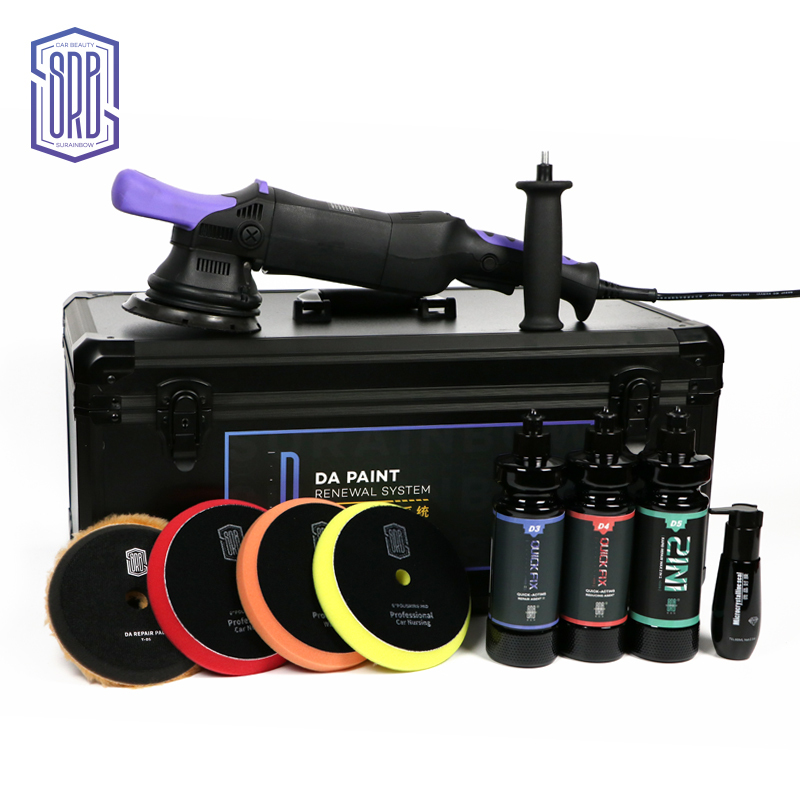
Application tools are ordinary detailing stock: a soft foam applicator pad and a clean microfiber towel for buffing.
Specifications
| Specification | Detail |
|---|
| Product name | Quick-acting Renewal Repair Wax 2 in 1 |
| Model | D5 |
| Brand | SURAINBOW |
| Category | auto wax |
| Product type | Paint repair wax |
| Net weight | 400 g (0.4 kg) |
| Working surface | Automotive paint |
| Main uses | Paint repair, scratch removal, waxing |
| Form | Ready-to-use product in a dispensing bottle |
| Shelf life | 3 years |
| Safety documentation | MSDS |
| Country of origin | Guangdong, China |
Differences from D3 and D4
- D3 is the repair-led product, made for paint-surface repair and waxing, with scratch removal as its stated advantage.
- D4 is the reducing agent, made for polishing and waxing, with the finishing and gloss side of the work as its emphasis.
- The two-in-one is the one that pairs renewal repair with waxing in the same bottle, so a single pass works the marks and leaves the panel waxed.
- Where a shop runs a separate compound and then a car wax polish, the single-purpose bottles match that bench; where the job is a quick finish, the combined product is the shorter route.
- The three are not interchangeable and there is no fixed running order; each stands on its own job.
- For a distributor building a car polish and wax line, the three products cover repair, finishing and combined work without duplicating one another on the shelf.
Ordering & Delivery
Confirm the quantity and destination first. This product is supplied in multiples of 12 bottles, with 60 pcs as the minimum order, and each carton measures 32.5 × 24 × 28 cm at 11.8 kg gross. Ask about current sample terms before a bulk or wholesale order so your team can test the product on its own panels and record the result under your workshop lighting. Approve the label and carton artwork. As the manufacturer, we can discuss branding, label content and shipping marks, and production is checked against the approved version. Confirm the document set for your destination. An MSDS is listed for this product; tell us where the goods are going so we can confirm which additional documents that market needs. Settle the balance and dispatch details together. Payment status, inspection arrangement, consignee information and carton marks are agreed before the goods leave to avoid paperwork delays. Availability is listed as in stock and fast shipping, allowing wholesale orders to be planned around promotion dates or a seasonal push rather than as a one-off purchase. Keep the batch reference. If a bottle leaks, a carton arrives short or a batch behaves differently, send the order reference, batch number, affected quantity, photos and a note on how the product was stored and used so the batch can be traced back through production.
Scale & Supply Capability
We are Guangzhou Liangdian Automotive Supplies Co., Ltd., an integrated manufacturing and trading company founded in Guangzhou in 2010. With 50 employees, we supply a broad range of car care products to distributors, wholesalers and brand owners. Our range lets you source across categories through one supplier, with in-stock options and fast shipping. Alongside our SURAINBOW brand, we offer OEM/ODM customization, supported by a professional R&D team that can design and develop products around your requirements.
FAQ
Can it be applied by machine instead of by hand?
Yes. A dual-action polisher on a soft finishing pad does the same job faster on large panels, kept at low speed with the pad flat and moving. Work the product in overlapping passes, keep the machine off edges, badges and sharp body lines, and buff the residue by hand with a microfiber towel. By hand, a foam applicator gives more control on a small mark, which is why most quick repairs are done that way. Whichever route you take, this car wax polish is worked until it clears and then buffed, not left to dry to a hard film.
How deep a scratch will it work on?
Surface marks are the target: light scuffs, wash marks, brush marks and the hazing left on older paint. A mark you can feel with a fingernail, or one that shows a different colour underneath, has gone through the clear coat and needs paint work rather than a car wax — the product will clean it up and wax over it, but it will not fill it to invisibility. Inspect under a bright light first and judge the panel before you start.
How much should I use on a panel?
Start with a pea-sized amount on the pad and work one small section at a time. The film should be thin enough to see the paint through it, and more goes on only when the pad starts to drag. As with any car care wax, how far a 400 g bottle goes depends on panel size, the condition of the paint and how heavily the product is applied, so work panel by panel and top up the applicator rather than loading it once for a whole car. A car polish and wax used in a thin film is doing its job at the surface — a thick layer only means more residue to buff off.
What happens if it gets onto unpainted trim or rubber?
Wipe it off promptly with a damp towel. This auto wax is made for painted panels, and dried residue on textured plastic, rubber seals or badges can be awkward to lift out of the grain once it has set. Masking tape around a small repair area is quicker than cleaning trim afterwards. A soft brush and water normally take a fresh mark off plastic, and anything that has dried hard should be softened with water before it is scrubbed.
Can it be used on a freshly repainted panel?
Give the new paint its cure time first. A fresh refinish is still releasing solvent, and sealing it under a wax for cars too early can trap that solvent and dull the finish. Once the painter or the paint supplier says the panel is ready to be sealed, it can be treated like any other panel. On a freshly repaired area, keep the first pass light and look at it in daylight before working the rest of the car.