Product Overview
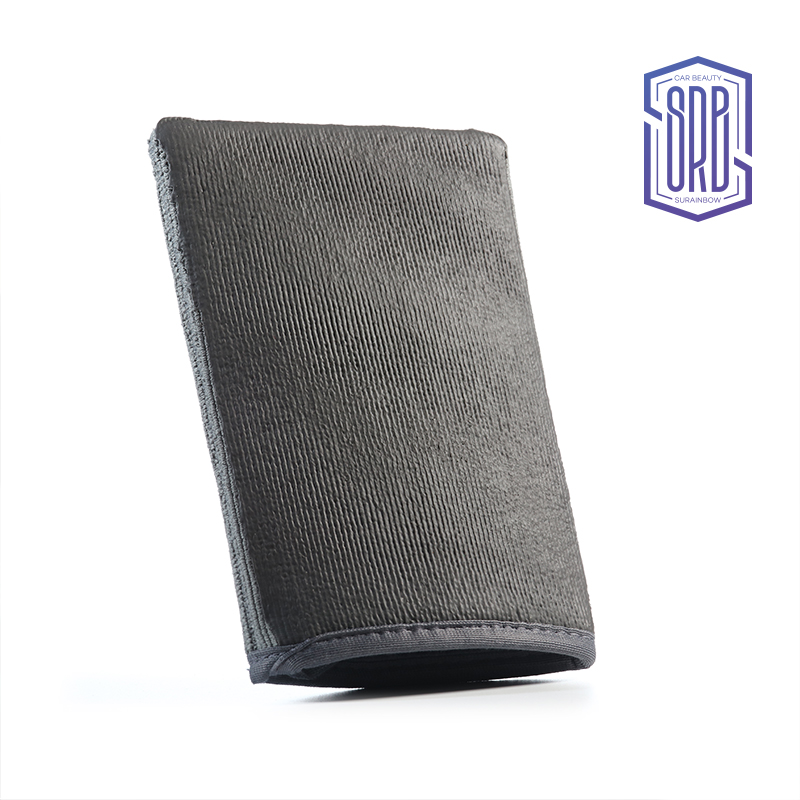
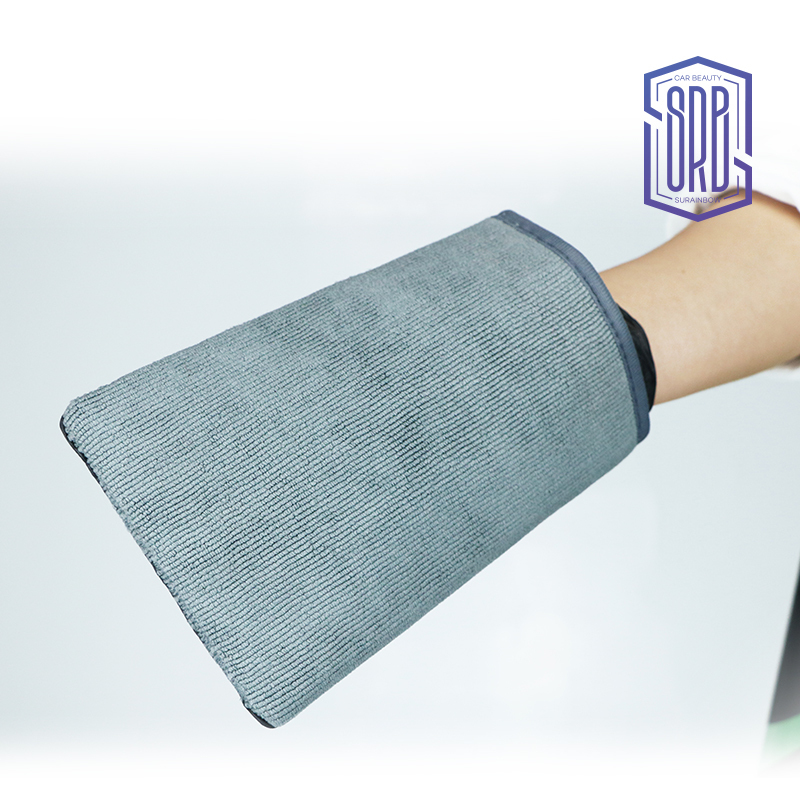
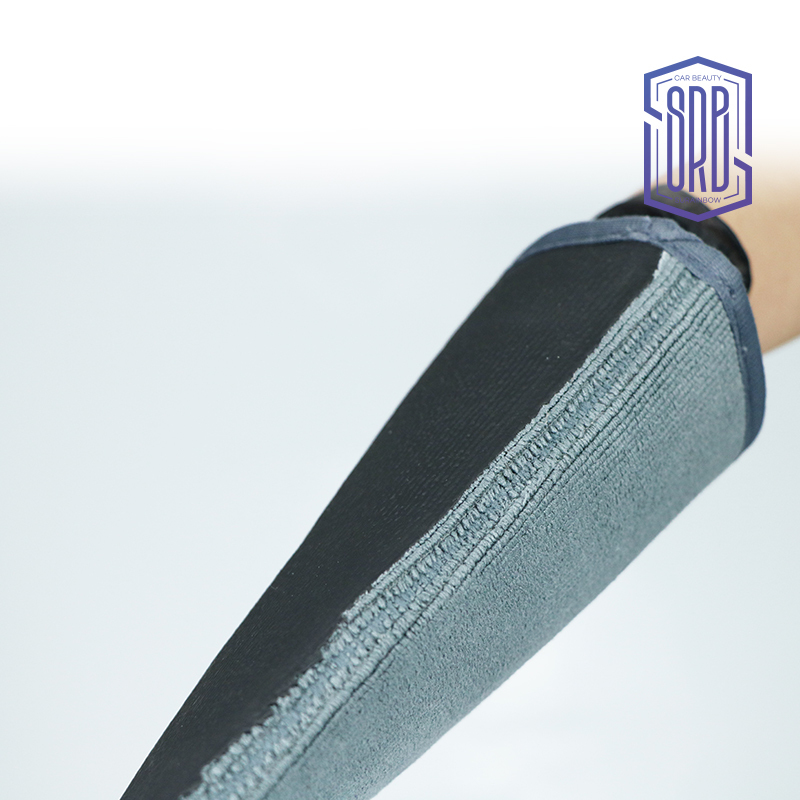
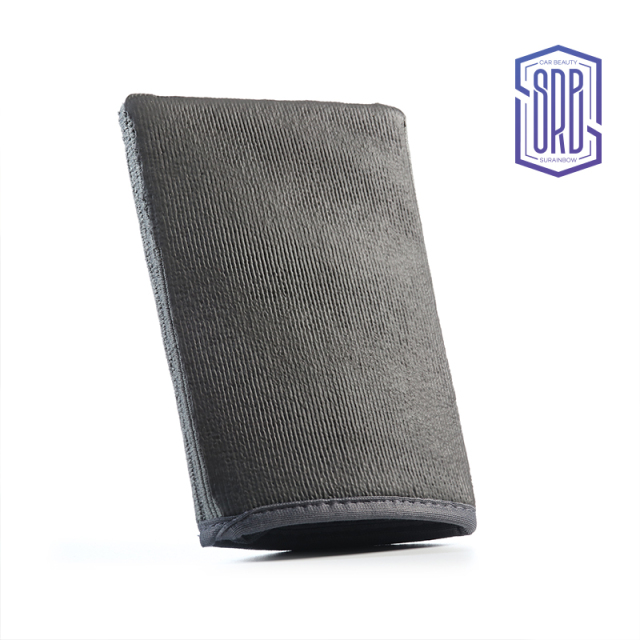
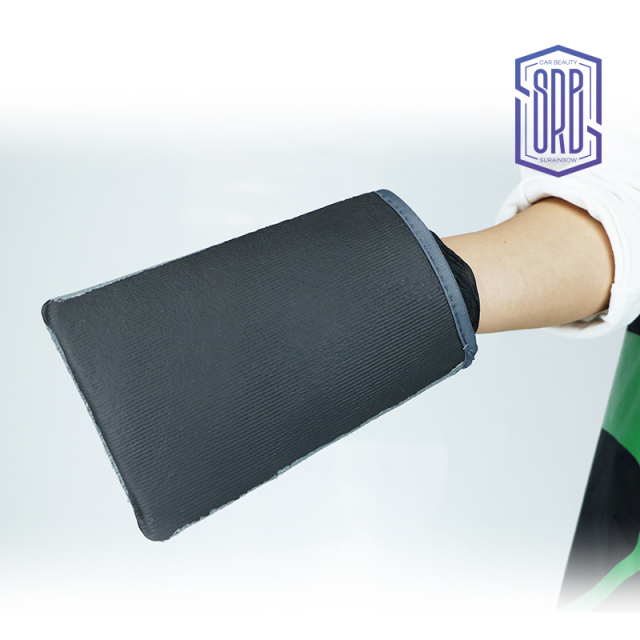
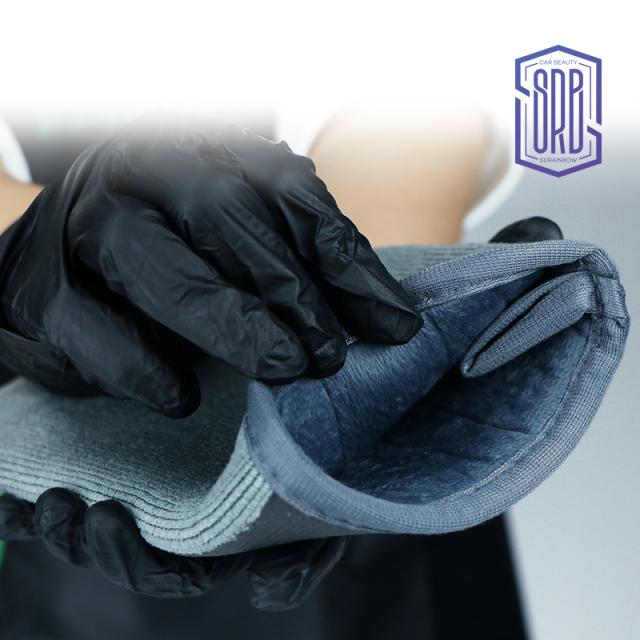
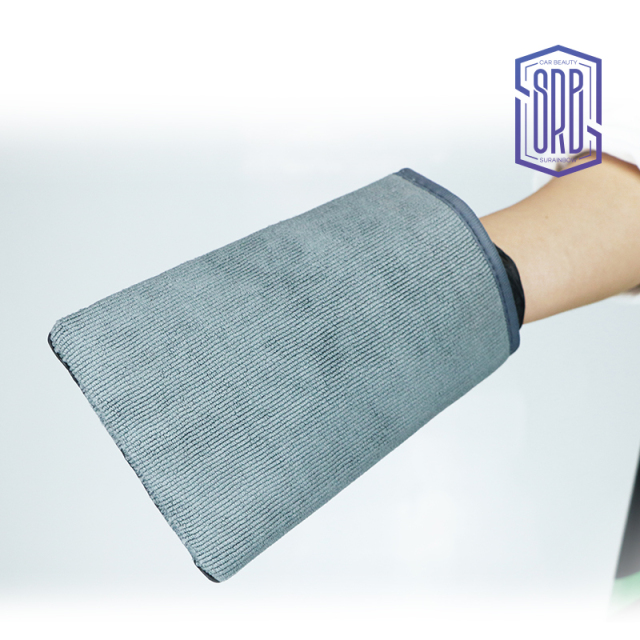
For technicians assembling car care supplies, the SURAINBOW Clay Mitt T-656 combines a ribbed, dark gray working face with an open hand pocket that places the contact surface directly beneath the palm for hand-guided movement. Its rectangular body has rounded corners, while a plush pocket lining, interior fabric strap and fabric-bound cuff and outer edges provide specific points to assess during fit and workmanship checks. Intended for car body applications, the mitt is individually packaged in a color box, with 24 pieces per box. Before routine use, confirm the working-face composition, backing material and grade with the supplier, then conduct trials using the intended finish, detailing routine and approved lubricant rather than inferring suitability from the ribbed appearance alone.
Hand Pocket & Construction
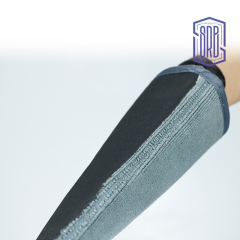
- A ribbed working face gives the mitt a clearly textured contact surface. For technicians assembling car care supplies, the close-up texture helps distinguish it from a conventional fluffy washing accessory without implying a particular abrasive grade.
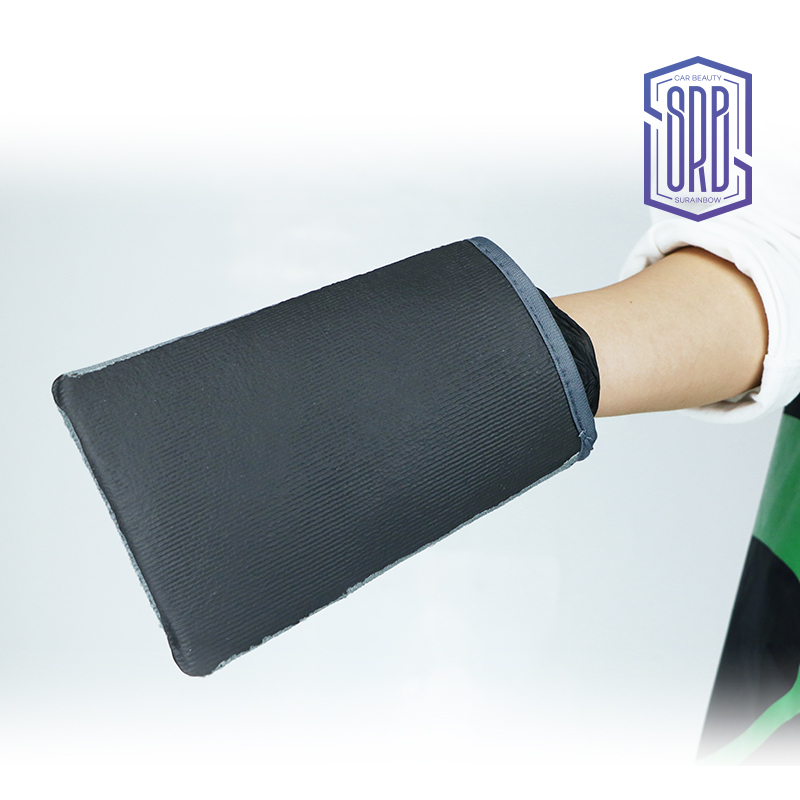
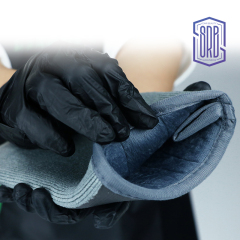
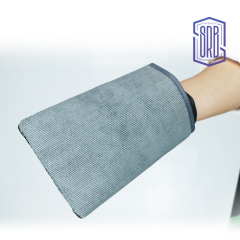
- An open hand pocket lets you wear the mitt over your hand rather than hold it by a separate handle. Among cleaning tools for car, this format places the working face directly beneath the palm for hand-guided movement.
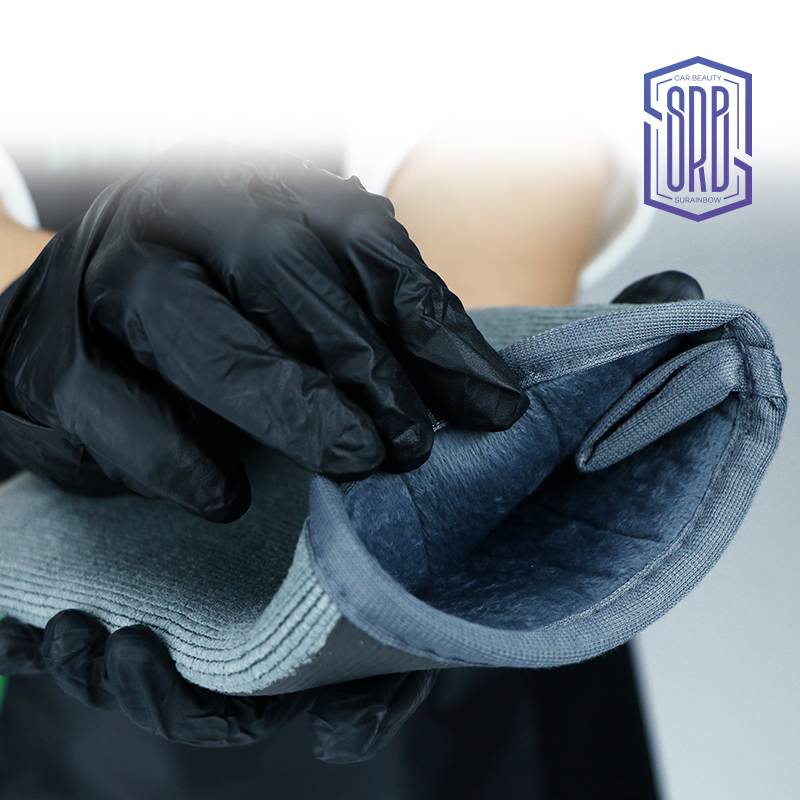
- A plush lining sits inside the pocket, while an interior fabric strap provides a place to position the hand. Check that your fingers can reach the strap comfortably without stretching the pocket or bunching the lining.
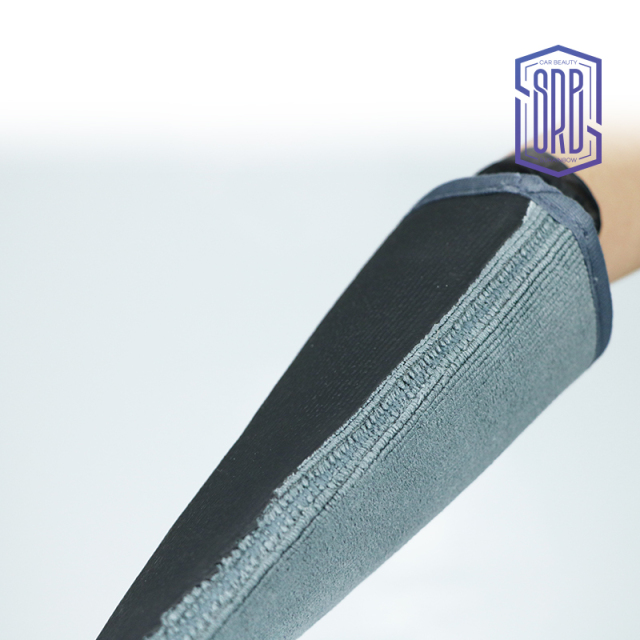
- Fabric binding finishes the cuff and outer edges. When checking workmanship, car cleaning products manufacturers should examine these areas, particularly where the binding turns around the corners and joins the pocket opening.
- The rectangular body has rounded corners and a dark gray working face. During a fit check, open and relax your hand to see whether the mitt stays comfortably positioned with the workshop gloves you normally wear.
- For car care kits, keep the mitt identifiable as its own accessory rather than treating every hand-worn item as interchangeable. Clear instructions help users distinguish the working face, interior lining and hand opening before use.
Product Specifications
| Property | Value |
|---|
| Brand | SURAINBOW |
| Model | T-656 |
| Product type | Clay mitt |
| Product family | car care products |
| Place of origin | Guangdong, China |
| Application area | Car body |
| Listed weight | 450; unit not specified |
| Declared expiry | 3 years; not a working-life rating |
| Individual packaging | Color box |
| Box packing quantity | 24 pieces per box |
Surface Trials & Approval
Painted-panel trials should use the same finish and detailing routine planned for everyday work. Before putting the mitt into regular service, establish the working-face composition, backing material and grade with our team. A ribbed appearance alone does not identify the material or tell you how strongly it will act on a finish.
For car care supplies used across several locations, record the mitt's overall dimensions, usable contact area and pocket opening in the approved specification. These measurements help keep later orders comparable and should be taken from the actual product rather than its shipping package.
Compatibility trials for car care products should identify the substrate precisely. Factory paint, refinished panels, protective films and coated finishes can require different treatment, so approval for one surface should not automatically carry over to another.
A car wash shampoo should only serve as the treatment lubricant if the mitt's approved instructions specifically allow it. Establish the liquid, preparation method and wetting requirements together; a product's ability to wash a vehicle does not establish suitability for every contact treatment.
When a car detailing cleaner forms part of the intended routine, include its identity and application instructions in the trial record. Keep the surface condition and treatment sequence consistent so a change in chemistry is not confused with a change in the mitt's behavior.
If car paint polish follows the mitt treatment, inspect and document the surface before that later stage begins. This separates the result of the hand treatment from any subsequent refinement and gives technicians a useful record of the complete process.
For formal approval, car cleaning products manufacturers should agree what acceptable appearance and handling look like under consistent lighting. Record the test surface, liquid, method and observations in writing. Any destination-market safety or third-party testing requirement should identify this actual mitt and the relevant test scope; request applicable reports before approval rather than assuming a general company certificate covers the accessory.
Use & Care
- Wash loose dirt from the vehicle before any approved mitt treatment. Use car wash shampoo according to its own directions, then clear away residue that could hide grit or make the condition of the surface difficult to judge.
- Prepare the work area so the mitt has a clean place to rest between panels. Keep cleaning tools for car away from the floor, dirty wheel equipment and other sources of particles that could be carried back to the finish.
- Follow the method established during the surface trial, keeping the contact area adequately wetted with the approved liquid. Stop if the mitt drags or the surface begins to dry rather than pressing harder to continue.
- Work in manageable areas and inspect the contact face as you go. If the mitt picks up visible particles or is dropped, stop using it until it has been cleaned and checked according to the approved instructions.
- Keep car paint polish and used polishing applicators separate from the mitt. Residue from a later finishing stage should not be carried back into an earlier preparation stage.
- Clean the mitt using the care method approved for its actual materials. Keep car detailing cleaner out of the lining unless that method permits it; stronger chemistry is not a substitute for correct cleaning instructions.
- Let the cleaned mitt dry in a clean, ventilated place before putting it away. Avoid an improvised machine-wash, solvent or heated-drying treatment, and keep the contact face protected from grit between uses.
Ordering & Delivery
- Color-box packing applies to the mitt, with a stated box quantity of 24 pieces. The batch package size is 36X20X24 cm and the gross weight per batch is 4.000 kg; establish exactly which packed quantity those batch measurements cover before arranging freight.
- The stated wholesale minimum is 100pcs, while selling units are multiples of 6. Have the accepted order quantity and its relationship to the box quantity written into the order confirmation so purchasing and receiving use the same units.
- OEM orders are accepted. The available branding, label and package changes for this accessory depend on the agreed scope; for car care kits, identify whether the mitt is individually boxed or forms part of an agreed combined pack.
- Packaging design and proof approval should cover the actual mitt, artwork version, label language, barcode details and carton marks. Approve the package fit and printed proof before authorizing the final version, and ask for current sample terms if a physical proof is needed.
- Payment is by T/T. Agree the currency, payment stages and balance requirements in the commercial offer, then check payment status before dispatch; no fixed deposit or balance percentage is assumed.
- SURAINBOW supply: In stock and fast shipping. Availability for this model and the dispatch schedule are checked for each order. For a mixed purchase that includes car wash shampoo, list the liquid and mitt separately so item-specific packing and transport requirements remain clear.
- Orders combining car care products should identify the required invoice, packing list and destination-specific documents before shipment. Agree the applicable document set, consignee details and handover arrangement for the actual order rather than assuming every document applies to a textile accessory.
- Report packaging or shortage issues within 7 days of receipt and product-quality concerns within 30 days. For order details, contact Amy at amy@surainbow.com or by phone, WeChat or WhatsApp on +8613922243235.
After-Sales & Traceability
A loose seam, detached binding or change in the working face is easier to discuss with clear photographs of the affected area and the complete mitt. Keep the product together with any identifying label while a concern is being reviewed, and describe where the change appeared rather than relying on a general statement that it feels different.
For car care supplies distributed to several branches, retain the order reference, receiving date and any batch or lot identification provided. These details help distinguish an issue affecting one item from observations involving several deliveries. Where no batch marking is present, the original order and box records are especially useful.
If car care kits have already been assembled, photograph the mitt separately as well as the complete kit. Record the affected quantity and whether the items were used or unused so the account of the problem remains specific to this accessory.
A concern involving cleaning tools for car should include how the tool was handled before the issue appeared. Note whether it was new or previously used, how it was cleaned, and whether the change developed during work or was noticed on opening.
Where a car detailing cleaner contacted the mitt, include the exact product identity and the preparation used. If car paint polish was applied later to the same panel, add photographs from before and after that stage where available. Keeping these stages documented helps make the sequence of events clear.
Retain an approved comparison sample when one has been agreed, together with its written specification and package version. For repeat orders, note any authorized changes rather than comparing different versions as though they were identical. These records support a focused discussion of the concern without assuming a cause or a particular remedy.
Clay Mitt & Paint Correction
- Choose T-656 for a clay-mitt requirement in your detailing-tool assortment. We supply this model as a hand-worn accessory; scratch removal is not a promised result of the mitt.
- Separate surface cleaning from paint correction when selecting a treatment. A cleaner surface and a corrected scratch are different outcomes, and improved cleanliness alone does not establish that a paint defect has been repaired.
- For scratches, swirls or other visible defects, have the finish and defect assessed before selecting the correction process. The mitt should not replace the compound, equipment or repair work that the assessment calls for.
- If your purchase also requires scratch wax or car paint polish, specify that chemical separately. Agree the exact product and included contents so a request for a mitt does not become an order for a different type of treatment.
- When adding T-656 to car care kits, identify it as the clay-mitt accessory and distinguish it from any separately included cleaning, polishing or protection products. Keep each item's purpose clear so customers understand which component performs each task.
Scale & Supply Capability
We are Guangzhou Liangdian Automotive Supplies Co., Ltd., an integrated manufacturing and trading company founded in Guangzhou in 2010. With 50 employees, we supply a broad range of car care products to distributors, wholesalers and brand owners. Our range lets you source across categories through one supplier, with in-stock options and fast shipping. Alongside our SURAINBOW brand, we offer OEM/ODM customization, supported by a professional R&D team that can design and develop products around your requirements.
FAQ
Will the clay mitt remove scratches from paint?
Scratch repair requires a separate paint-correction assessment. A clay-mitt preparation step does not by itself establish correction of scratches, swirls or deeper paint defects, so do not treat this mitt as a substitute for an appropriate repair process.
Does the ribbed working face indicate the mitt’s material or abrasive grade?
The T-656 has a ribbed, dark gray working face, but its composition, backing material and grade require confirmation with the supplier. The ribbed appearance alone does not identify the material or establish how strongly it will act on a finish. Before routine use, conduct trials with the intended finish, detailing routine and approved lubricant.
How is the hand pocket constructed, and what should we check for fit?
The T-656 has an open hand pocket with a plush lining, an interior fabric strap and fabric binding around the cuff and outer edges. Check that fingers reach the strap comfortably without stretching the pocket or bunching the lining. Open and relax your hand while wearing your usual workshop gloves to assess whether the mitt stays comfortably positioned.
Can one surface trial establish suitability for all the finishes we service?
Approval for one surface should not automatically carry over to another. Factory paint, refinished panels, protective films and coated finishes can require different treatment. Identify the substrate precisely in compatibility trials, and use the same finish and detailing routine planned for everyday work. Keep the surface condition and treatment sequence consistent when assessing the intended routine.
Can we use our car wash shampoo as the lubricant for this mitt?
A car wash shampoo should serve as the treatment lubricant only if the mitt’s approved instructions specifically allow it. Establish the liquid, preparation method and wetting requirements together before routine use. A shampoo’s ability to wash a vehicle does not establish its suitability for every contact treatment, so include the intended lubricant in trials using the planned finish and detailing routine.