Recognising Traffic Oil Film
- The blade smears instead of clearing. A clean screen wipes dry in one pass; a filmed screen leaves a wet, greasy streak that the blade drags back across the glass.
- A rainbow haze in the swept arc. Oil film refracts light, so the edge of the wiper path shows colour in the rain — one of the clearest signs that the problem is oil rather than dust.
- Glare that blooms at night. Oncoming headlights spread into a wide flare instead of a defined beam, and drivers describe it as fog that only appears after dark.
- Chatter and judder. Film changes how the rubber grips, so the blade skips and hops along the screen instead of gliding.
- Clean in daylight, greasy after a shower. A light rain is enough to bring the smear back; the screen passes inspection in the workshop and fails on the road.
- The film sits where the blades travel. Screen edges often look clear while the middle of the swept arc stays hazy, which is not how dust and insects usually spread.
- Why a normal screen wash cannot move it. A detergent lifts dirt and holds it for the blade to wipe away, while oil needs a solvent that breaks the layer itself. This is the point where a detailer stops reaching for a general car detailing cleaner and treats the glass properly — the line car cleaning chemical manufacturers draw between a wash and a degreaser.
Product Overview
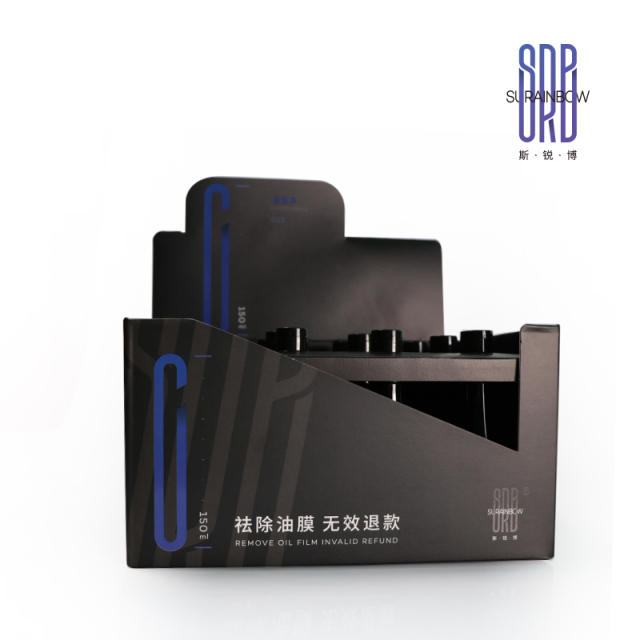
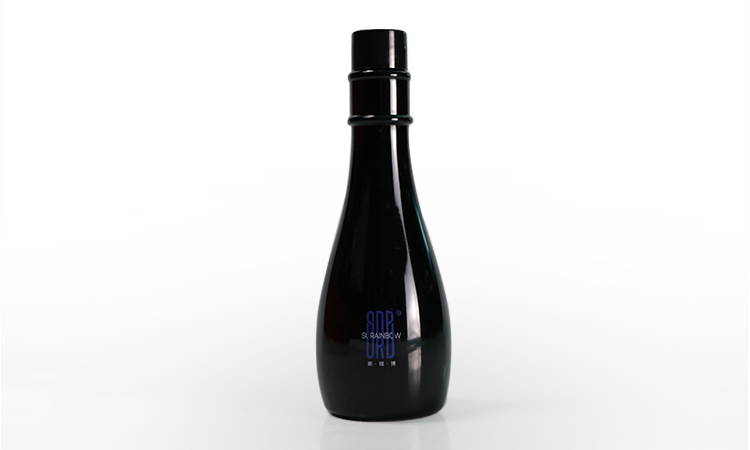
A windscreen usually stops clearing long before it looks dirty. Traffic leaves an oily film bonded to the glass, ordinary washer fluid pushes that film around instead of lifting it, and the driver notices a blade that smears in the rain and a screen that flares under oncoming lights. This bottle is built for that layer. It goes into the windscreen washer reservoir, and the car's own jets and blades carry it across the glass — no polisher, no spray bottle, no extra equipment at the bay. It is a different product from the screen wash sold for everyday top-ups, and the difference shows in how you judge it. A routine screen wash is judged on how clean the glass looks. A dedicated car wash cleaner is formulated for dust, insects and road splash: it lifts them and holds them so the blade can wipe them away. Oil film is not dirt sitting on the surface — it is a layer bonded to the glass — and shifting it takes a degreaser strong enough to break that layer. That is why this bottle is used as a treatment rather than a stronger daily dose. Stock and own-label bottles run through the same filling setup, so the formula approved against your sample is the formula that comes back in the next carton — the consistency car cleaning products manufacturers promise when they take on an own-label run.
Coated Glass & Coating Compatibility
The strength that breaks oil film also breaks a glass coating. Ceramic coating and crystal plating are themselves oil-repellent layers sitting on the glass, so a chemistry designed to lift an oil layer lifts the coating with it. Water stops beading, rain repellency drops back to bare glass, and on a customer's car that is a conversation nobody wants after the job. For a distributor or a shop the practical answer is two lines rather than one: this degreaser for bare glass, and a film-safe cleaner for screens where the coating has to survive. Buyers who stock car care products for both kinds of car end up using each bottle for the job it was built for instead of apologising for the wrong one. We would rather print that on the bottle than let a detailer find out on a coated screen. There is a second, deliberate use. When a coating is spent and patchy, stripping the remainder with this degreaser leaves bare, oil-free glass — the right base for a glass polish and a fresh coat. If you are not sure whether a screen is coated, look at it in the rain: coated glass makes water stand up in beads and roll away, while bare glass lets water lie flat. A drop of water on an inconspicuous corner tells you the same thing in the workshop.
Wiper-Kettle Application
- Check the glass before you pour. If the windscreen or the wiper blades carry a coating, this is the wrong bottle for that car — use a film-safe cleaner instead.
- Use up or draw off most of the old washer fluid, so the bottle is not diluted by a reservoir already full of a weaker mix.
- Pour the whole bottle into the wiper kettle.
- Top the reservoir up with clean water and refit the cap.
- Run the washers and let the blades sweep the screen, working from the top of the swept arc downward so loosened film is carried to the edge rather than back across the glass.
- Give it a second cycle if the screen still smears; heavy film can take two passes before the blade runs clean.
- Rinse the blade edges and the glass with clean water, then wipe the blades dry with a microfibre cloth.
- Store what is left sealed and upright. Never decant it into an unmarked bottle — a clear bottle of washer fluid in a workshop is an accident waiting to happen.
Wash-Bay & Workshop Applications
- High-volume wash bays. Kept behind the counter as the car wash cleaner for cars whose screens have gone hazy — one bottle per reservoir turns a complaint into a treatment while the car is still in the bay.
- Detailing studios. Used as the step before glass polishing or a fresh coating, where the glass has to be genuinely oil-free for the polish or the coating to bond.
- Dealership and used-car preparation. Trade-ins and pre-delivery cars often arrive with a filmed screen, and a treatment during prep removes the one fault a buyer notices on a dusk test drive.
- Fleet, taxi and rental turnaround. Drivers report night glare long before anyone mentions a dusty dashboard, so a scheduled de-grease keeps the complaint off the desk.
- Mobile detailers. No machine and no polishing setup — the vehicle's own washers spread the product, so a van can offer a screen de-grease with nothing more than a cloth for the blades.
- Distributors and stockists. A fast-moving line in a car care products catalogue, because the customer arrives already describing the symptom rather than asking what the product does.
- Body shops. Solvent and polish residue leave the screen greasy after panel work; a treatment clears it before handover and saves running a full car detailing cleaner routine on glass that only needed degreasing.
Specifications
| Product name | C12 glass degreaser wiper fluid |
| Job | Removes traffic oil film from windscreen glass |
| Goes into | Windscreen washer reservoir (wiper kettle) |
| Dosage | One bottle per full kettle fill |
| After pouring | Top up with clean water |
| Delivery to the glass | Vehicle washer jets and wiper blades |
| Surfaces | Windscreen and other vehicle glass |
| Not for | Glass coating, crystal plating, coated wiper blades |
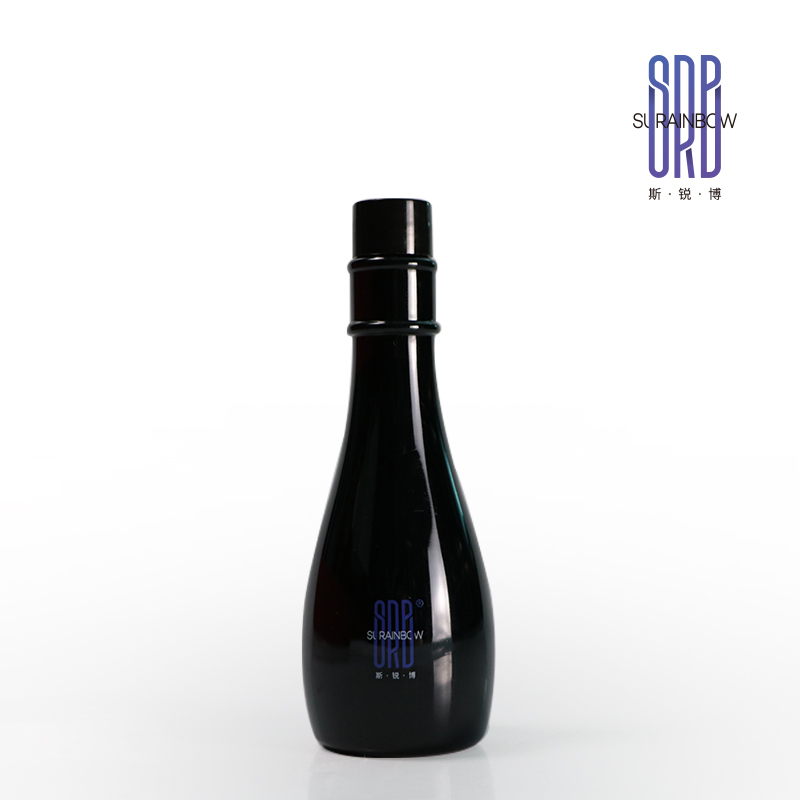
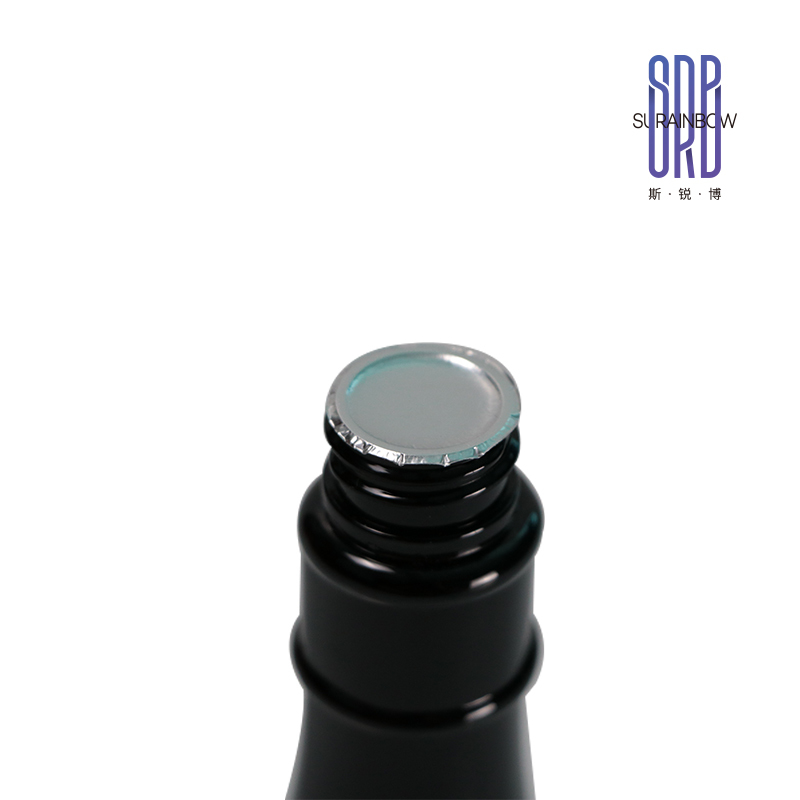
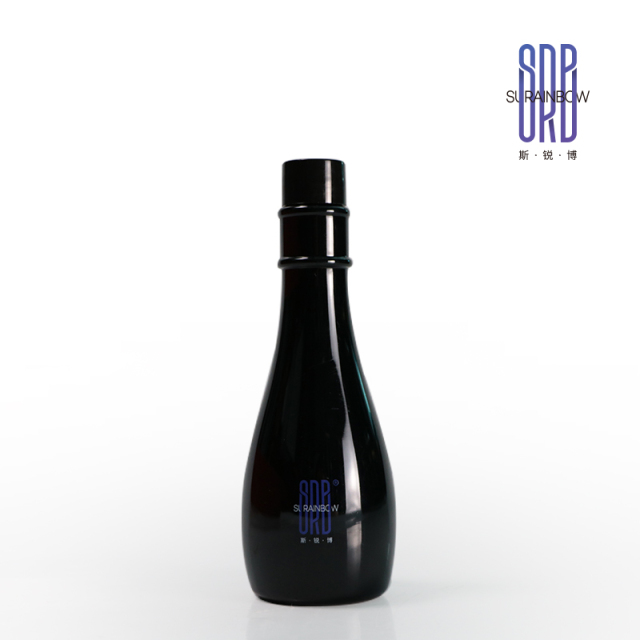
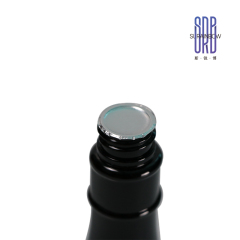
| Bottle | Glossy black bottle, screw cap, foil seal under the cap |
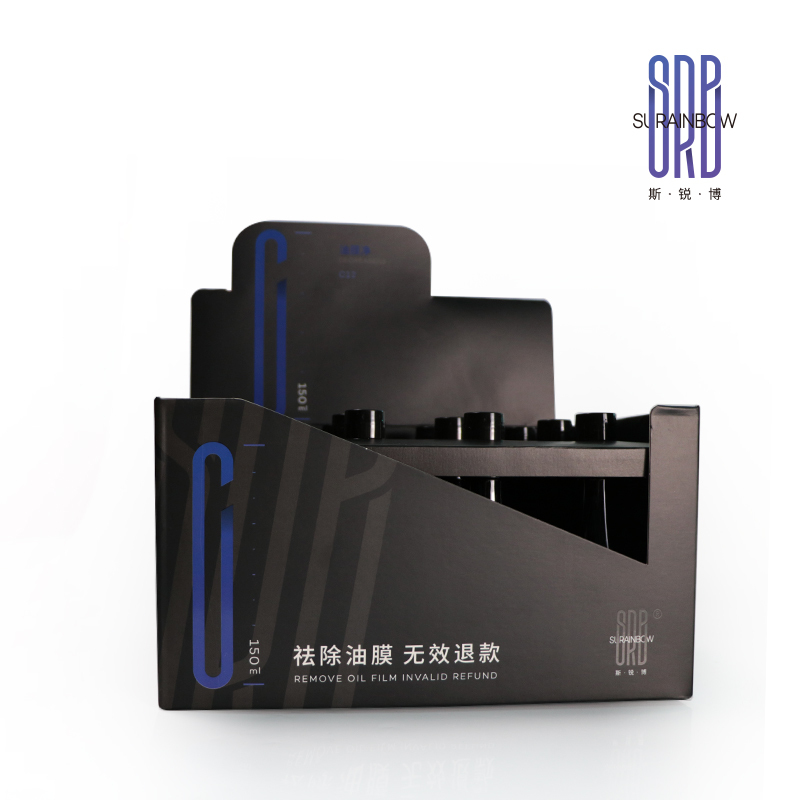
| Pack | Printed carton, one bottle |
| Brand | SRB / SURAINBOW |
Ordering, Sampling & Delivery
- Send the brief — product, destination market, pack size, expected quantity, and whether you want the stock bottle or your own artwork. Quotations for car cleaning products manufacturers, distributors and studios are built on the same scope so they can be compared properly.
- Confirm the minimum order quantity for the pack you actually want. It moves with bottle size, label and carton, so it is set in the quotation rather than published as a single figure.
- Sample, test and approve. Ask your sales contact about sample availability and test the formula on your own glass; sample and courier charges are confirmed before dispatch, and the approved bottle can be sealed as the bulk reference.
- Sign off the packaging. Label artwork, language, barcode and carton marks are proofed before anything is printed, and the wording is reviewed for the destination market at the same stage.
- Production and checks. Bulk runs against the approved sample and written specification, with appearance, fill, closure and leak checks before the cartons are sealed.
- Balance, documents and dispatch. Confirm the balance, the shipping arrangement and the document set you need — SDS/MSDS, CoA, GHS label information, commercial invoice, packing list and customs paperwork. As car cleaning chemical manufacturers we prepare the export set that matches your market and terms.
- Stock and timing. In stock and fast shipping on our own SURAINBOW car care supplies, with production timing for own-label runs confirmed before you release the order.
- Batch reference and after-sales. Every shipment carries a batch reference, with retained samples kept against it. Report a leaking or short carton within 7 days of receipt, and a product-quality concern within 30 days, with the order reference, batch number, affected quantity and photos or video.
Scale & Supply Capability
SURAINBOW is run by Guangzhou Liangdian Automotive Supplies Co., Ltd., a factory-trade operation set up in Guangzhou in 2010 and now 50 people strong. Sixteen years in car care have given us a one-stop supply position: our own SURAINBOW lines are held in stock for fast shipping, and an associate factory with modern production equipment and an established quality management system keeps replenishment moving. We take OEM and ODM work and our R&D team develops to your specification. Buyers in the Middle East, the United States, Southeast Asia, Europe, the UK, Russia, Africa and Australia already order from us.
FAQ
When should I use this instead of normal screen wash?
When the screen has stopped coming clean. A routine car wash cleaner is built for dust, insects and road splash, and it does that job well; oil film is a bonded layer, and adding more of a maintenance wash does not shift it. Keep the normal screen wash for everyday top-ups and bring this bottle out when the smear survives a wash.
Does the bottle need measuring or mixing?
No. The whole bottle goes into the reservoir and you top up with water, so there is nothing to measure at the car and no ratio for a new member of staff to get wrong. That is also why it behaves as a treatment: the bottle is used in one go, not poured in capfuls between services.
How often should a screen be treated?
React to the glass rather than to a calendar. A car that parks beside a busy road, spends its day in dense traffic or covers a lot of motorway miles films up faster than one kept in a garage, and the wipers start smearing long before the screen looks dirty. Treat it when the smear returns. A branch supplying car care products to taxi, rental or fleet accounts usually folds it into their standard pre-delivery routine.
Can it be used on the rear screen and side glass?
The bottle is dosed for the washer reservoir, so the windscreen and any rear screen with its own washer jet are where it does its work; glass without a jet is a different format job. Nothing else is needed to run it — the vehicle's own system does the spreading, which is why it travels well in a mobile van.
Does it affect the wiper blades?
Uncoated rubber blades pass through it and are wiped clean with the rest of the screen at the end of the cycle, which keeps loosened film from sitting on the rubber. Coated blades are the exception — their coating comes off with the film, so a car with coated wipers belongs with the film-safe cleaner instead.
How does this fit with the other glass products in the range?
It covers one of three jobs. A film-safe cleaner handles routine work on coated screens, this degreaser strips oil film from bare glass, and a glass polish on a machine disc deals with water spots and mineral staining. Distributors usually build all three into one car care supplies line so a workshop has an answer for every complaint instead of a single bottle that half-works on all of them.
Will it remove water spots or dried-on stains?
No — that is a polishing job, not a washing one. Water spots and mineral staining sit in the glass and need a machine polish with a glass disc, which is the point where a detailer reaches for a car detailing cleaner built around polishing rather than washing. Oil film is the layer that makes an otherwise clean screen smear, and it is what this bottle targets.