Product Overview
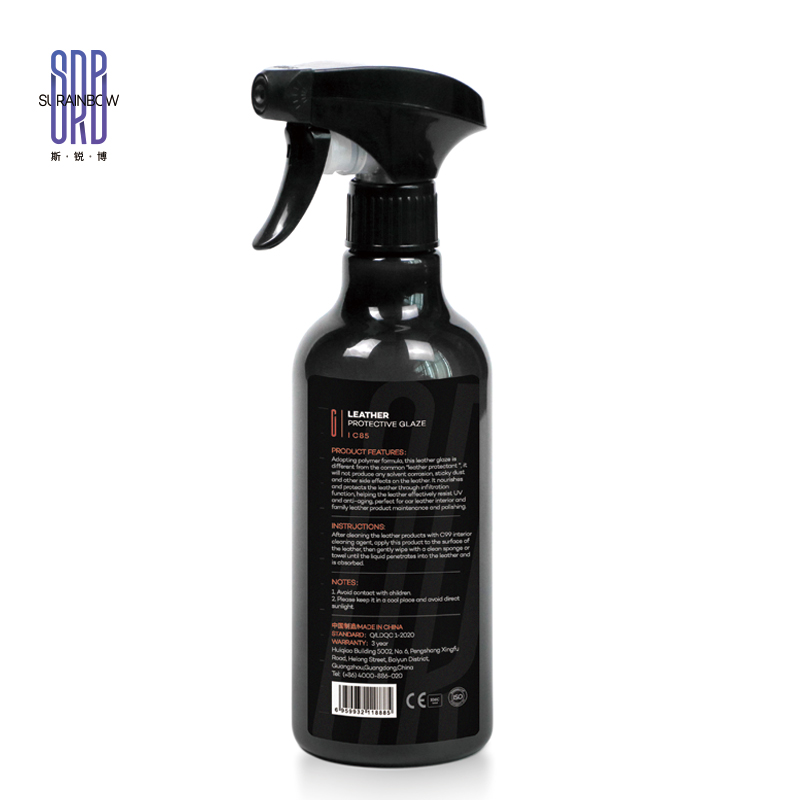
Open the door of a well-kept car and the leather is the first thing a customer touches. Misted onto a pad and worked in by hand, it sinks into the hide, leaves a thin protective film behind, and helps slow the drying and dulling that sun, friction and daily use bring. Treated panels look deeper in colour, feel softer, and hold that condition for longer. It is a care product, not a repair compound. Light scuffs, dry grain and the shallow surface cracks that come with age look noticeably better after treatment, but a split seam or a hole needs a filler, not a glaze.
Formula & Finish
The formula is built around a polymer base with aloe and nourishing oils, and it works by infiltration. The carrier lowers the surface tension just enough to carry the oils into the grain, and the polymer stays behind as a thin, breathable film once the liquid has dried. Nothing is left sitting on the surface waiting to be wiped off by the next pair of jeans. Leather care is not paint care. Ceramic car care products are engineered to cure into a hard, glassy layer on paint and glass — exactly the behaviour you do not want on a seat that folds, stretches and creases every day. A finish that flexes with the hide survives the bolsters; a rigid one fails there first. Two details matter on the bay. And the film is not greasy, so it does not pull dust out of the air or mark a light-coloured trouser leg on the way out of the showroom. Colour shifts slightly. Treatment deepens the tone and brings back the sheen that cleaning strips out, which is usually read as a good result — but on very pale hides, recoloured panels and older, worn leather, try a hidden area first and check it in daylight before doing the whole interior.
Who It's For
- Importers and distributors. Buyers building a car care supplies line get an interior item that repeats: every treated car uses product, and a 500 ml trigger bottle is easy to shelf, ship and explain to a counter team.
- Detailing chains and studios. One written procedure covers every bay, so a technician who joined last month produces the same finish as the one who trained him.
- Dealerships and used-car operations. Pre-delivery and pre-sale interiors come up fresher without a process that holds a car overnight waiting for a ceramic car care coating to cure.
- Private-label and brand owners. Companies that work with car cleaning products manufacturers on their own range can have this glaze filled under their own label and artwork.
- Home and lifestyle resellers. Leather furniture care is a natural second market for shops already selling automotive leather products, and it uses the same bottle.
- Front and rear seats. Cushions, bolsters, headrests and seat backs — the panels that take the most sun, friction and body oil. - Door cards and armrests. The elbow-height leather that dries out and darkens before anything else in the cabin. - Dash, console and steering. Leather-wrapped dash tops, console lids, gear gaiters and steering wheel rims, applied sparingly so nothing stays tacky under the hand. - Dealer and used-car prep. A tired interior photographs better after a treatment, which matters on the forecourt and in digital listings. - Home and office leather. Sofas, armchairs, dining chairs and headboards take the same treatment; a bottle kept in the house rarely sits unused for long. - Mobile and interior-only work. Vans that run with a compact car care supplies load can finish a cabin on site in minutes, without a second trip back to the shop. - After the outside is finished. Interior treatment is normally the last stage of a full job, once washing, decontamination and the car polish stages are done and the paint is dry.
Specifications
| Product type | Leather coating (protective glaze) |
| Product code | C85 |
| Pack size | 500 ml per piece |
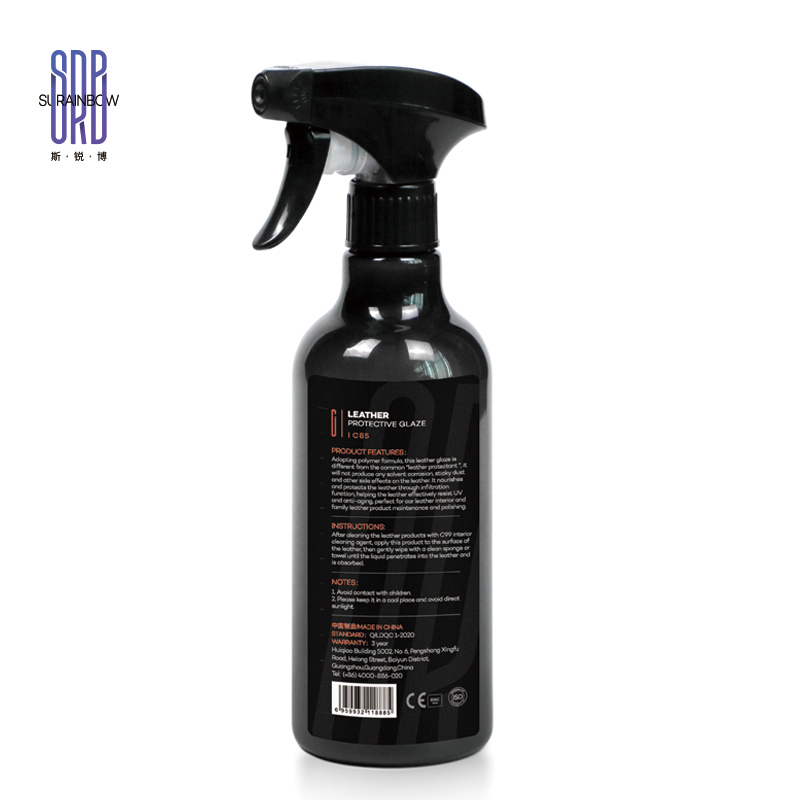
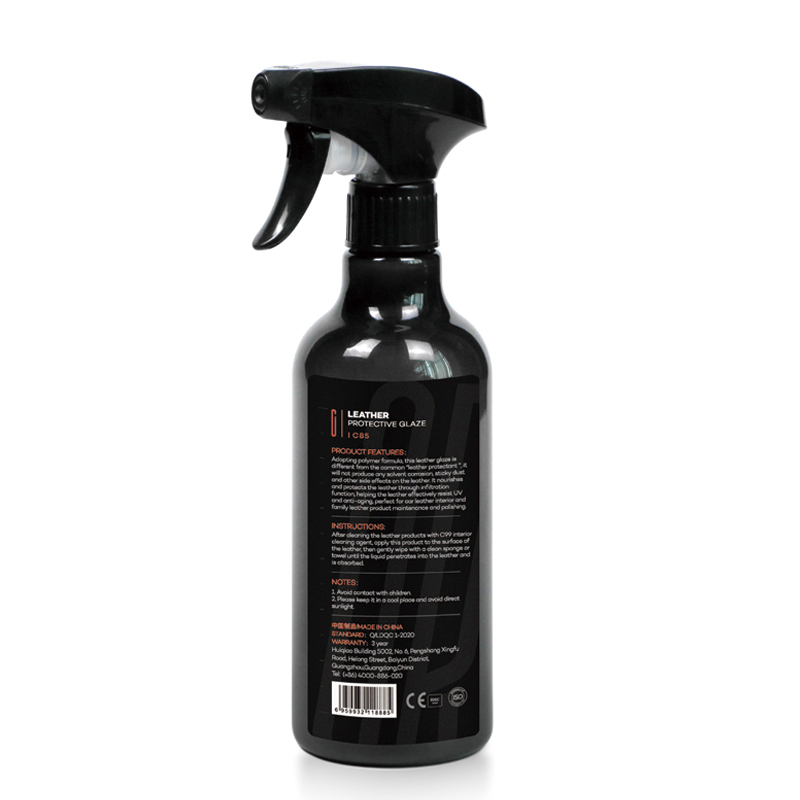
| Pack format | Trigger-spray bottle with printed label |
| Formula base | Polymer with aloe and nourishing oils |
| Dilution | None — used as supplied from the bottle |
| Finish | Soft satin; non-greasy, no solvent odour |
| Protection | Anti-ageing film with UV protection |
| Intended surfaces | Car interior leather, auto seats, leather sofas and chairs |
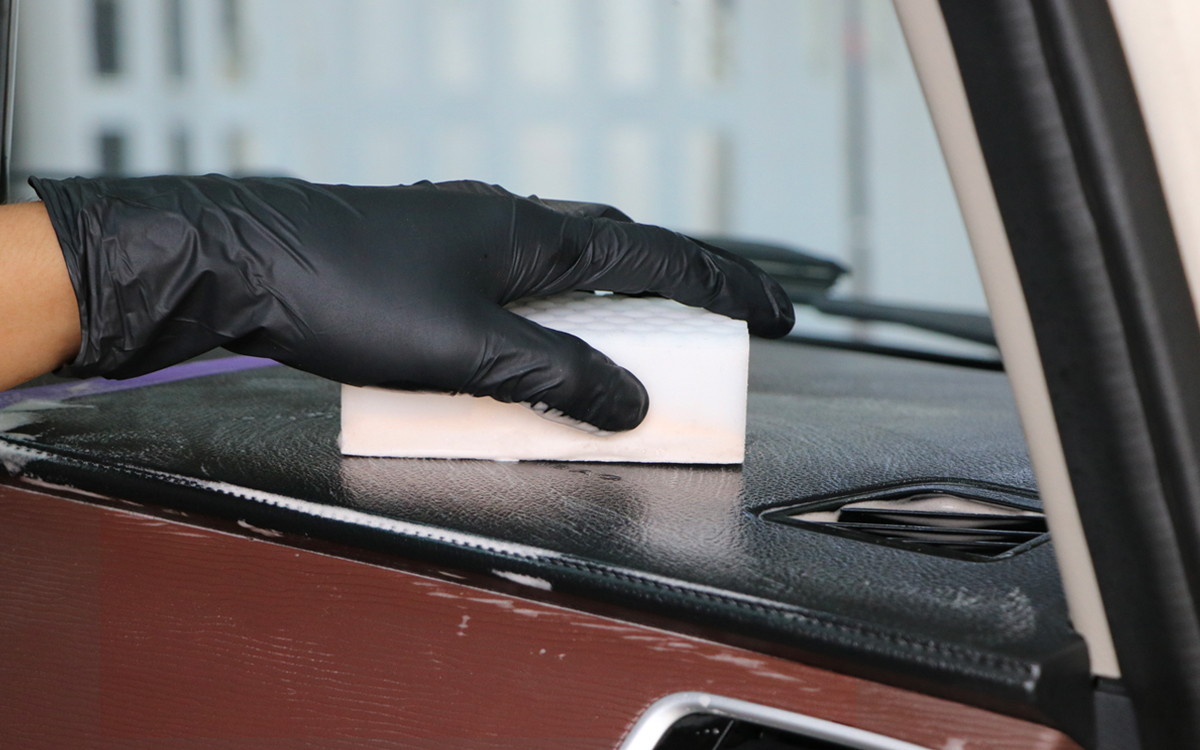
| Application | Clean first with a car detailing cleaner, then work in with a foam pad or towel until absorbed |
| Storage | Cool place, out of direct sunlight; keep away from children |
| Origin | Made in China |
How to Apply
- Clean first. Vacuum the seams and perforations, then wipe the panels down with an interior car detailing cleaner and let them dry completely — the glaze cannot reach the grain through dust, body oil or an old dressing.
- Test a hidden area. Use the underside of a seat or the back of a headrest, let it dry, and check the colour in daylight, since worn, repaired and very pale leather can shift tone.
- Load the pad, not the panel. Give a foam applicator pad or a folded microfibre two or three mists; this keeps spray out of perforations, stitching, switches and seat rails.
- Work one panel at a time. Use small circles and keep going until the liquid disappears into the leather, adding a little more only where the surface still looks dry.
- Buff off the excess. A clean dry towel over bolsters, armrests and headrests takes off whatever the hide has not absorbed and leaves a satin finish rather than a wet look.
- Air the car. Leave the doors open for a few minutes while you pack up so any residual mist clears before the owner collects.
- Repeat when it looks tired. There is no clock on it — treat the seats again when the leather starts to look matte and feel stiff rather than supple, and more often on cars that live outdoors in strong sun.
- Foam applicator pad | Holds the glaze, spreads it evenly and keeps spray out of perforations and seams Microfibre towel | Buffs off what the leather does not absorb and takes the panel to a satin finish Interior cleaner | Cleans the hide first so the glaze can actually penetrate instead of sitting on residue Soft detailing brush | Lifts dust from stitching, perforations and seat rails before any liquid goes on Car care kits | A spray, a pad and a towel make a simple leather set that sits naturally beside car polish, wash and wax items
Ordering & Delivery
- Send the brief. Start with code C85, the market you sell into, the quantity you have in mind and any label or artwork you already hold; as car cleaning products manufacturers we quote against that scope rather than against a product name alone.
- Sample and test. Ask your sales contact about sample scope and timing, then check absorbency, finish and scent on the leather you actually work with before you commit.
- Approve the reference. Keep the approved sample, the test notes and the agreed tolerances together — that sealed reference is what bulk production is compared against.
- Prove the packaging. Bottle, trigger, label artwork, language versions, barcode and carton marks are proofed and signed off before the run starts; the same step covers the pack details when the glaze goes into car care kits.
- Confirm quantity, price and schedule. Both the piece price and the number of pieces that make a run depend on the label and packaging scope, so they are set on the quotation, together with whether the glaze ships as a single line or inside a wider car care supplies order.
- Produce and check. Batches are compared with the approved sample for appearance and fill, with leak and seal inspection, label and carton control, and retained samples kept for traceability.
- Settle and ship. In stock and fast shipping applies to standard packs; the balance is settled before dispatch, and the shipping method, carton marks and consignee details are confirmed with the order.
- Take the documents with the goods. SDS, CoA, GHS label information, commercial invoice, packing list and customs paperwork travel with the shipment; tell us which set your market requires when you request the quote.
- Follow up by batch. Report leaks or shortages within 7 days of receipt and quality concerns within 30 days, quoting the batch number with photos or video, so the batch can be traced against its retained sample and the approved reference.
Scale & Supply Capability
SURAINBOW is run by Guangzhou Liangdian Automotive Supplies Co., Ltd., a factory-trade operation set up in Guangzhou in 2010 and now 50 people strong. Sixteen years in the car care supplies trade have given us a one-stop supply position: our own SURAINBOW lines are held in stock for fast shipping, and an associate factory with modern production equipment and an established quality management system keeps replenishment moving. We take OEM and ODM work and our R&D team develops to your specification. Buyers in the Middle East, the United States, Southeast Asia, Europe, the UK, Russia, Africa and Australia already order from us.
FAQ
Which leather surfaces can this leather coating be used on?
Finished automotive leather: seats, bolsters, headrests, door cards, armrests, dash and console trim, gear gaiters and steering wheel rims. Outside the car it suits leather sofas, armchairs and headboards. It is not for suede, nubuck, alcantara or untreated aniline leather, and on perforated seats apply it to the pad rather than spraying the panel.
Will it leave the seats slippery or greasy?
No. The liquid is worked in until the leather has taken it, then the excess is buffed off with a dry towel. What is left is a soft satin surface that is dry to the touch — not a wet dressing that transfers onto clothing or collects dust from the air.
Does it remove scratches or fill cracks?
It is a glaze, not an abrasive car polish and not a filler. It improves how light scuffs, dry grain and shallow surface cracking look by putting colour depth and protection back into the surface, but it does not level the leather or close a split seam. Holes, tears and deep cracks need a leather filler first, with a treatment afterwards.
How often does it need reapplying?
There is no fixed interval — it depends on sun, heat and how hard the seats are used. Reapply when the leather starts to look matte and feels stiff rather than supple, and expect to work more often on cars that live outdoors in strong sunlight.
Can I use a ceramic coating on leather instead?
Ceramic car care products are formulated to cure hard on paint, glass and wheels. Leather flexes and absorbs, so a hard film tends to sit on the surface and can fail along the creases. This glaze is built to soak in and stay flexible with the hide.
Do I have to clean the leather before applying it?
Yes — the glaze has to reach the grain to do its job. Vacuum the seams, wipe the panels down with an interior car detailing cleaner, and let them dry fully. Applying over dust, body oils or an old dressing gives a patchy result that does not last.
Can I put a small leather care set together around it?
A 500 ml spray, a foam applicator pad and a microfibre towel cover the whole job, which is the shape most car care kits take in a standard product range. Cleaner, pad, glaze and towel is the usual four-piece build, and the same bottle is what the end user keeps for top-ups at home.