Guangzhou Liangdian Automotive Supplies Co., Ltd.
Guangzhou Liangdian Automotive Supplies Co., Ltd.

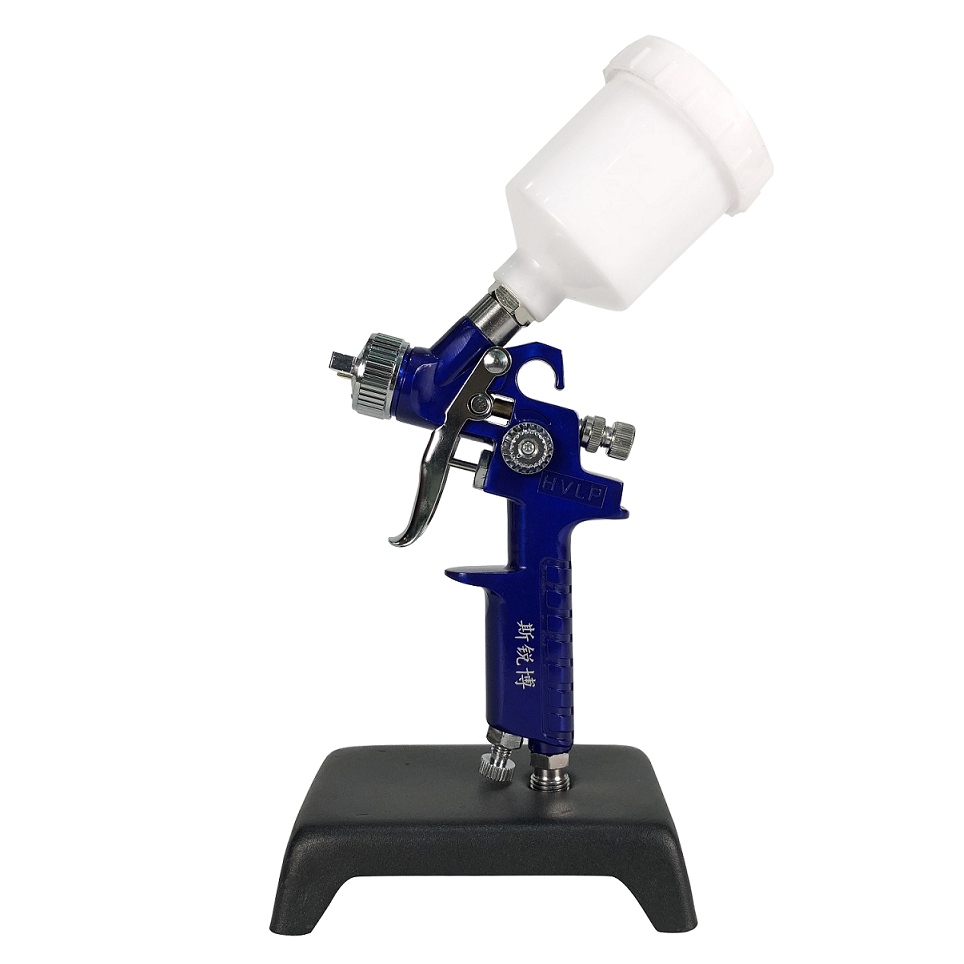
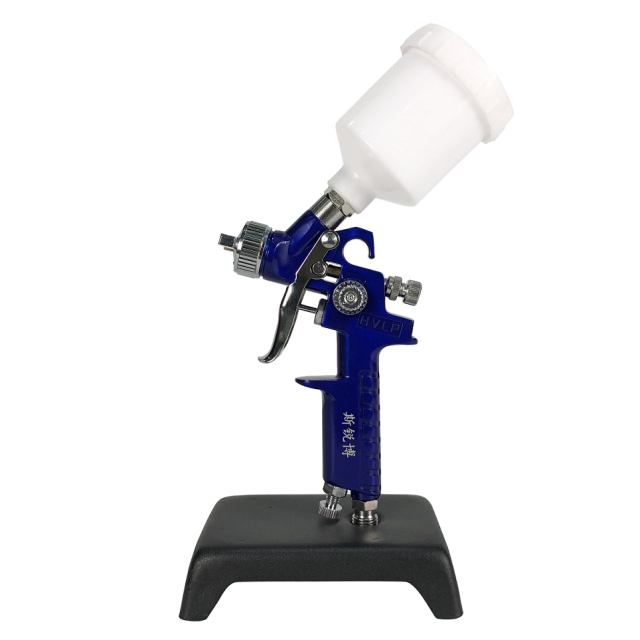
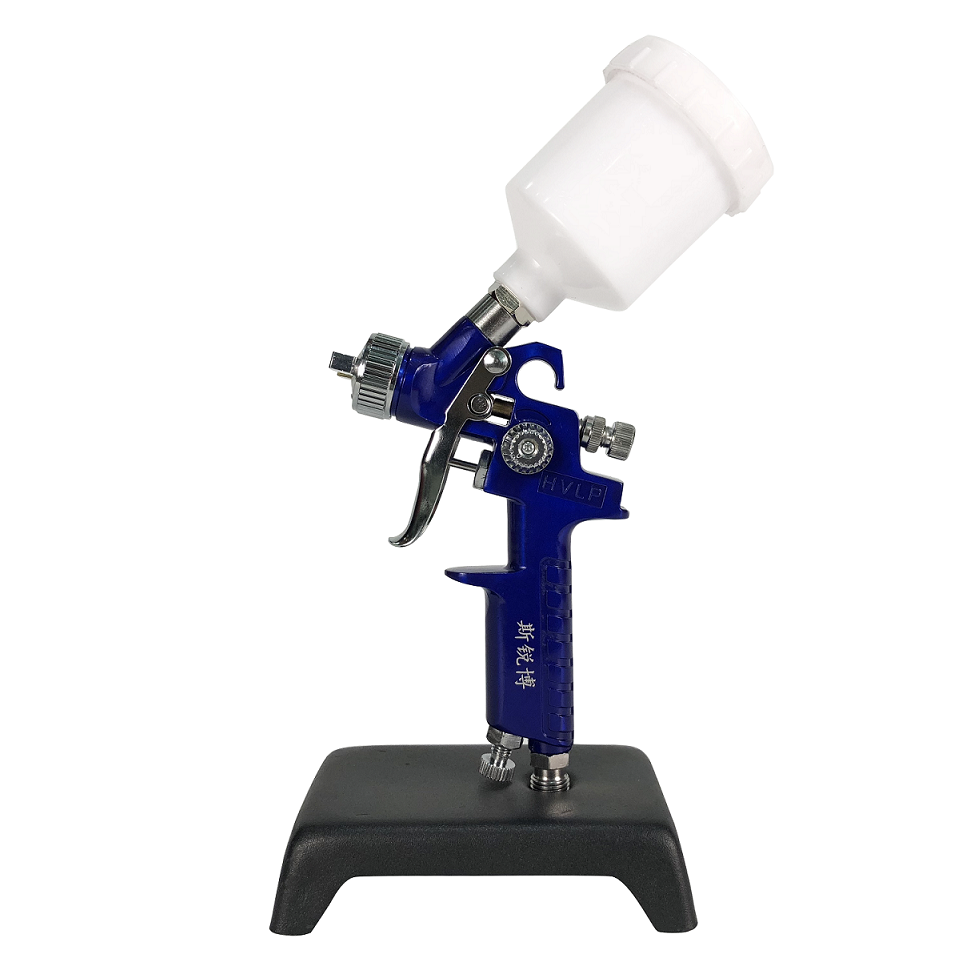
A 125 ml cup sits on top of the gun body, so material feeds into the nozzle by gravity and the spray keeps flowing when the wrist rolls past horizontal — useful under a sill or along the lower half of a door. Handheld air spray work on a bumper corner, a mirror cap or a set of small mouldings is exactly what this gun is sized for, because a full-size gun and a full pot are overkill for a part that size. One body accepts any of the three fluid tips, fine through wide, so a shop can cover fine topcoat work and heavier primer coats without buying two guns, and keep one spare body on the shelf instead of a spare of everything. Painters, refinishing bays, detailing studios and training benches use it that way, and distributors stock it beside the washing chemicals, waxes and automotive ceramic coating products that fill out a shelf. The curved metal trigger and knurled adjustment knobs stay usable through nitrile gloves, and the blue body with its white cup is easy to pick out on a bench that already holds three other guns. For ceramic coating suppliers building a spray-and-care range, it is the natural add-on next to the liquids and the pads.
| Model | T-684 |
|---|---|
| Brand | SURAINBOW |
| Type | Gravity-feed air spray coating gun |
| Fluid tip sizes | 1.4 mm, 1.7 mm, 2.0 mm |
| Nozzle material | Stainless steel |
| Body material | Zinc alloy, copper, stainless steel, PVC |
| Cup capacity | 125 ml |
| Cup position | Top-mounted, gravity feed |
| Controls | Knurled fluid and fan adjustment knobs |
| Trigger | Curved metal trigger |
| Colour | Blue body, white cup |
| Country of origin | China |
Stainless steel is chosen for the nozzle because it is the part that meets pigment, hardener and water-based material head-on, and it holds its seat and tip dimension longer than a plated brass tip that wears round with use. The body is cast in zinc alloy, which keeps the air passage rigid and holds the threaded inlet firm when a coupler is screwed on and off between jobs, while copper and stainless steel parts carry air and fluid inside. The 125 ml cup is PVC, so the top of the gun stays light when it is full and the wrist does not tire over a run of panels. Knurled knobs on the fluid and fan settings turn with a gloved hand, and the curved trigger keeps the finger in a natural position through long passes instead of hooking around a straight bar. For a distributor ordering ceramic coating products alongside tools, the metal build is the practical selling point: it survives workshop handling and repeated flushing better than a plastic-bodied gun. We also formulate the liquids as ceramic coating manufacturers, so a question about tip size and a question about the coating itself can go to the same team.
Water in the air line leaves a mottled finish that no amount of polishing takes out, and no gun setting can repair air it did not make, so the supply deserves as much attention as the equipment. The inlet is threaded for a screw-on coupler, so match the hose fitting before the first job rather than discovering a mismatch with a cup already mixed. Material drives the setting — a thin product such as a ceramic coating spray needs a smaller fluid opening and less material per pass, while high-build primer needs more of both, and thinning should follow the material maker's data sheet rather than guesswork. Solvent-based and water-based products both run through the stainless steel nozzle, but check aggressive solvents against the seals and cup before a long session. The gun is built for sprayable automotive paints and coatings; gritty, heavily filled or abrasive materials block the passage and wear the tip, and they belong on a gun designed for them. If you are working through a shelf of ceramic coating products, match each one to a tip before the first job rather than after the first bad panel.
Spot repair and blending in a body shop: a bumper corner, a door edge or a quarter panel gets a mix sized to the part, so no leftover material has to be thrown away. Primer and surfacer stages: with one of the wider tips fitted, the unit also handles the heavier coats applied before sanding. Small parts and trim: mirror caps, grilles and mouldings can be sprayed on a stand with a narrow fan, without masking a whole vehicle. Detailing studios: a bay that also applies an automotive protective coating often keeps a second unit for those smaller protective jobs so the topcoat gun stays clean. Mobile and single-vehicle work: the compact unit and a 125 ml cup pack into a van kit, and a shop that also sells protective coatings for cars can offer small spray jobs as an add-on service. Distributor shelves: the unit fills the spray-equipment slot beside the chemicals, pads and polishes that a detailing customer expects to buy together, which is why suppliers of protective coatings and tool wholesalers both list it. Training and second-gun work: a workshop can hand the unit to an apprentice or dedicate it to one material, keeping the main gun dialled in for production work.
Ordering & Delivery
Fluid tip at order: tell us which of the three tip sizes the work requires and what this product will spray, so the correct tip is packed with the unit. Stock and dispatch: this product is in stock and available for fast shipping, so a workshop that loses a unit mid-job does not have to wait for a production run. Sample and approval: if you want to test the spray pattern and cup size in your own booth before committing, ask for a sample. We will confirm the scope and any applicable arrangements first. Packing: stock orders ship in standard cartons. If you need your own carton, label or shipping mark, the artwork is reviewed and a proof approved before the goods are packed. Documents: the invoice, packing list and any product documents your market requires are listed and confirmed during order review. After delivery: quote the order reference if anything needs checking, so the query can be traced to the correct dispatch. Buying alongside chemicals: distributors who source coating liquids from us often add this product to a chemical order, and both can be included in the same quotation. Range building: because we manufacture the liquids as well as supply tools, a distributor can put together a matched spray-and-care range on one order.
Task or document | How we handle it --- | --- Market test documents (CE, safety report) | Tell us the destination market before ordering; we confirm which test documents exist for model T-684 and which do not. No certificate is issued for a test that has not been carried out. Invoice and packing list | Sent with the shipment; check the carton count against the packing list before signing, and photograph any damage at that point. Batch reference | The order reference and model number link the unit to its dispatch, so a fault can be traced to a batch instead of being described over the phone. Fault on arrival | Send the order reference, a photo of the carton and a photo of the unit or tip; we confirm how the case will be resolved before anything is returned. Repeat orders | Specify the tip size, cup and any branding on the first purchase order so the second order arrives with identical specifications. OEM/ODM scope | Logo, label and carton work is quoted project by project; the scope applicable to this product is confirmed in writing before an order is placed.
Paint is only one of the materials this gun atomises. The stainless steel nozzle and the choice of three tips exist so the same body can lay a thin protective film from a ceramic coating spray and, with a wider opening, push a high-build primer; viscosity and solids decide the tip, not the word printed on the tin. Shops that run coatings keep the finest tip for thin products and hold the wider two for primer and surfacer, so abrasive pigment never wears the fine seat.
What limits a session is the mixed material rather than the cup. A catalysed clearcoat, a two-pack primer and a spray on ceramic coating all start reacting the moment the parts are combined, while a water-based basecoat skins over instead of gelling. Put the pot life from the material's own technical sheet where the operator can see it, mix only what can be laid inside that window, and treat the 125 ml cup as a practical ceiling for a coating job rather than a target to fill every time.
Keep the lid on between passes and the gun out of direct sun. When the work stops, empty the cup and flush at once — material left in the passage overnight can cure hard enough to turn a tip change into a nozzle rebuild. Do not top up a part-used mix with fresh product to stretch it, and if a mix starts to string or skin, discard it rather than spray a lumpy film that has to be sanded back.
Not every protective liquid belongs in a gun. Where a maker's instructions specify hand application, follow them, because spraying changes the film build. Where spraying is intended — and many ceramic coating for cars products are made for it — a fine tip, a small cup and two light passes give a more even film than one heavy coat.
We are Guangzhou Liangdian Automotive Supplies Co., Ltd., an integrated manufacturing and trading company founded in Guangzhou in 2010. With 50 employees, we supply a broad range of car care products to distributors, wholesalers and brand owners. Our range lets you source across categories through one supplier, with in-stock options and fast shipping. Alongside our SURAINBOW brand, we offer OEM/ODM customization, supported by a professional R&D team that can design and develop products around your requirements.